
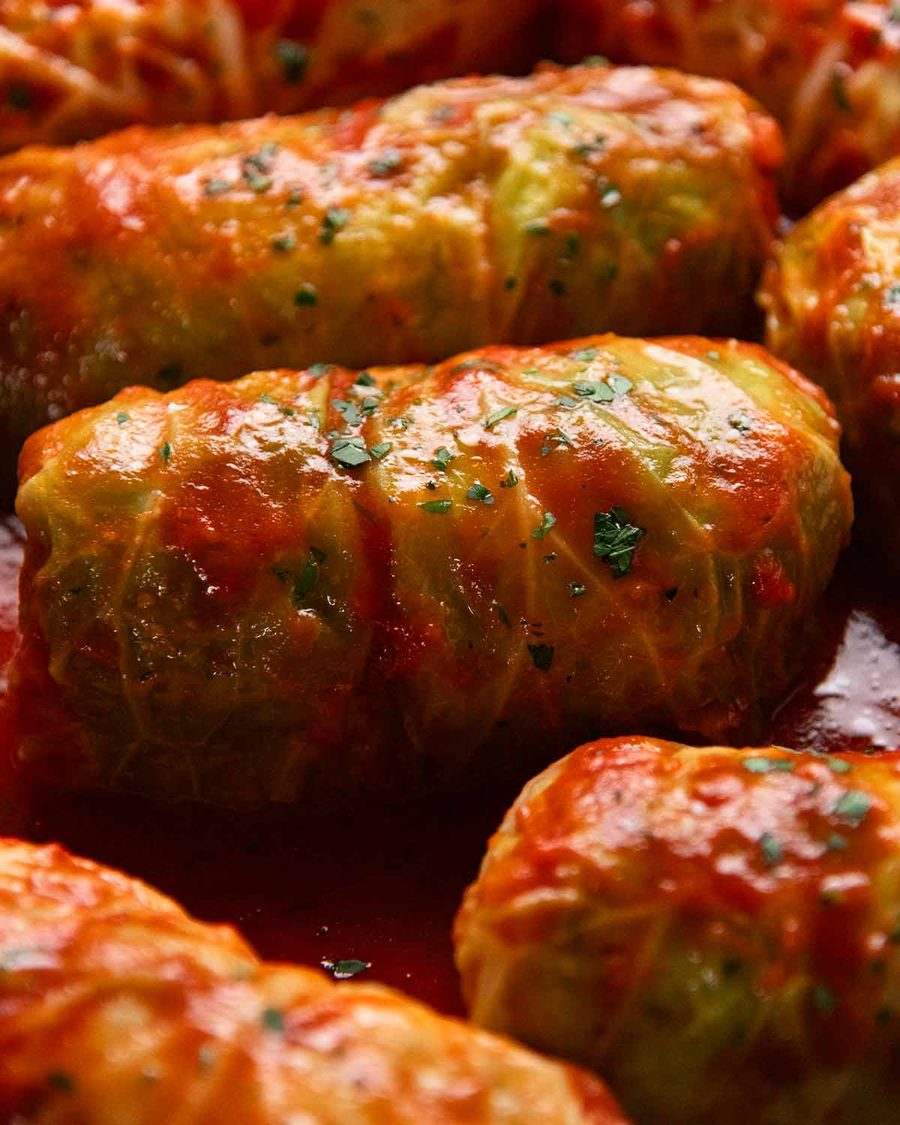
Here is a recipe for traditional Polish stuffed Cabbage Rolls (Gołąbki). Made with a savoury pork and rice filling wrapped in tender cabbage leaves then simmered in tomato sauce, they are beautifully soft and succulent inside. It’s pure hearty, homey, Polish comfort food!

Nagi's Notes


Cabbage rolls are so much easier than you think – and so incredibly delicious! I could not stop eating them. And that filling…. you will be amazed at how soft and succulent it is. I’ll even go so far as to say this might be the highest and best use of cabbage – ever.
As for making them – not gonna lie, this isn’t a Monday night quick ’n easy. They take time, but there’s nothing technically difficult about them. And the rolling is a breeze – easier than burritos, easier than spring rolls, easier than rice paper rolls!
PS I might’ve taken the last of the cabbage rolls last night.🤷🏻♀️

Polish Cabbage Rolls (Gołąbki)
Cabbage rolls are a beloved comfort food across Central and Eastern Europe. Today I’m sharing traditional Polish gołąbki (pronounced goh-WOMP-kee), right up there with pierogi as one of Poland’s best-known comfort foods. I love the simple pork and rice filling, flavoured with onion, garlic and marjoram, and slowly cooked until beautifully soft and succulent.
I know cabbage rolls look fiddly and difficult, but don’t be intimidated! They do take time, but they’re surprisingly easy to roll – and certainly don’t need to look perfect.
My recipe is a pretty classic Polish home cooking version, though there are a couple of ways I deviate from typical recipes. I grate rather than dice the onion for the filling which makes it even softer. And secondly, I reduce the stock the cabbage rolls are poached in and use it for the tomato sauce. That way, all the lovely flavour from the cabbage and pork stays right where it belongs!

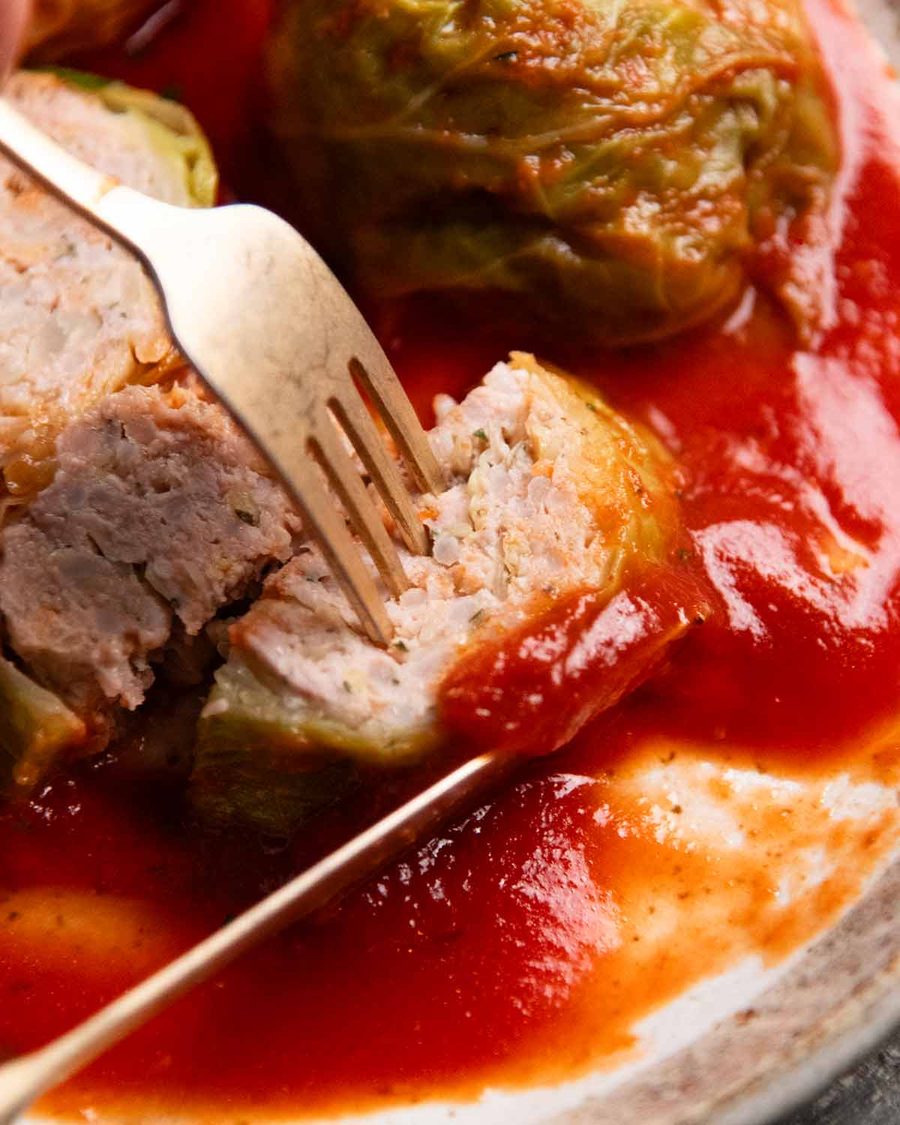
Ingredients in Polish Cabbage Rolls (Gołąbki)
I like that Cabbage Rolls makes use of a whole cabbage. The large outer leaves are used for rolling, the rest is finely chopped and mixed into the stuffing. Here’s what you need.
1. the Cabbage
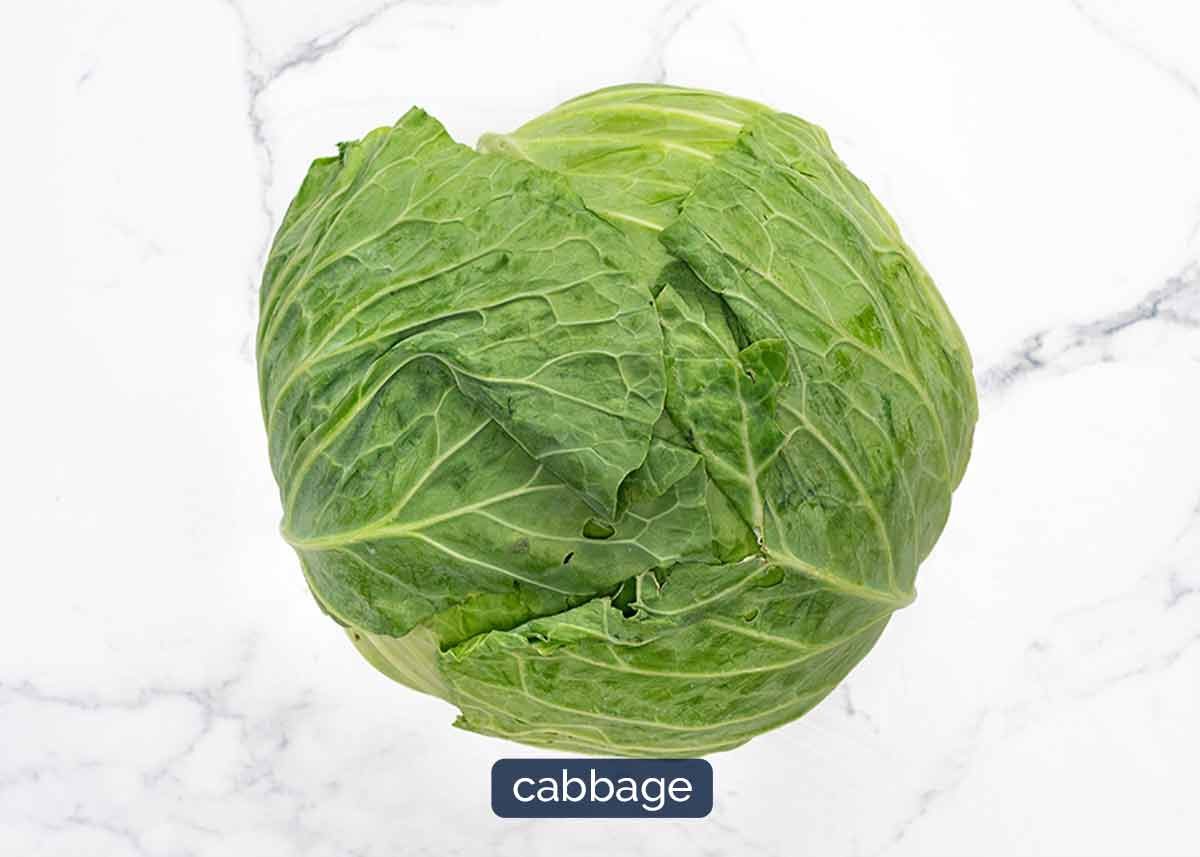
I use Savoy cabbage which is widely available here. I like it for its crinkled, tender leaves and its slightly sweet flavour, and the leaves are a little softer so it makes the cabbage rolls easier to roll. However, a regular green cabbage can also be used. According to my Polish friend, both varieties are used in Poland.
Not all recipes specific the size, but it does matter. Aim for a head around 1.5kg / 3lb (18cm / 7″ diameter). If yours is larger, just peel extra outer leaves off and reserve for a different purpose. If yours is smaller, make smaller cabbage rolls and save leftover stuffing to make it again, or to stuff other vegetables like capsicum or cored zucchinis.
2. the stuffing
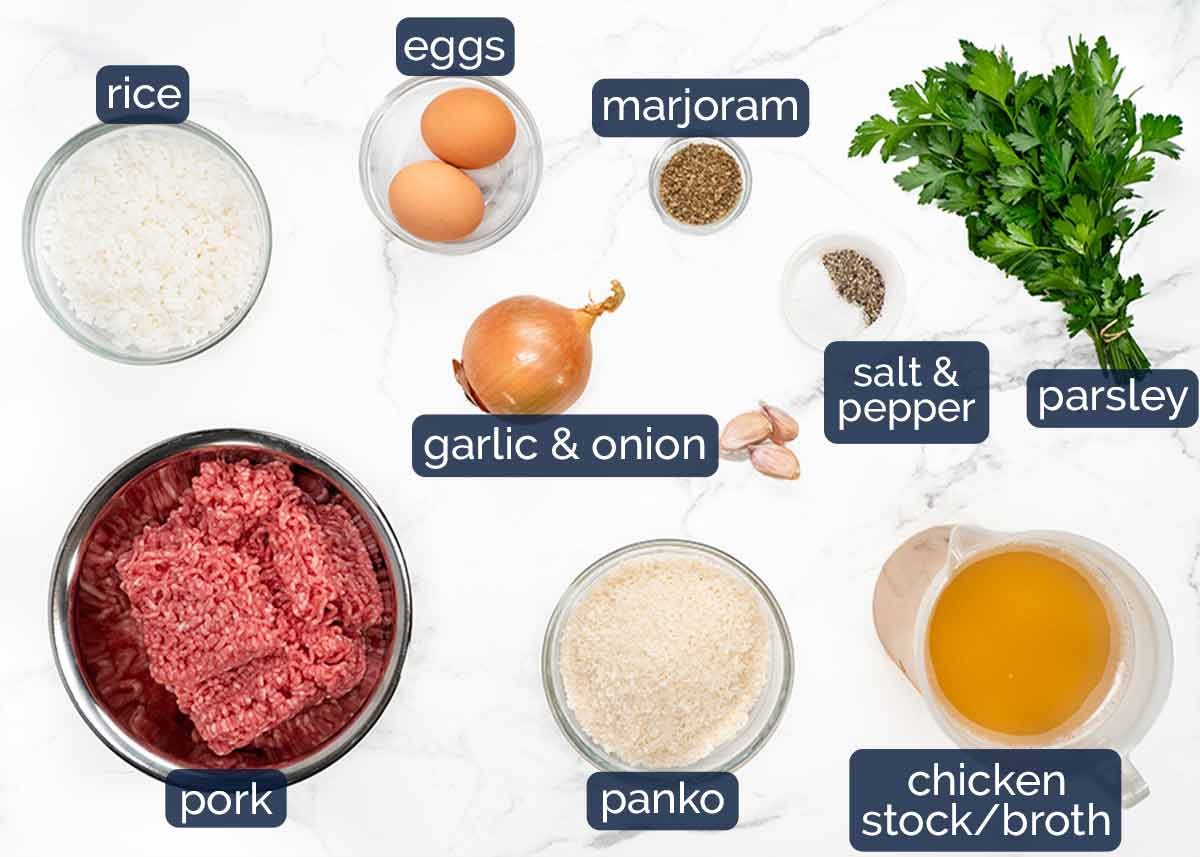
Pork mince (ground pork) – Makes a beautifully soft stuffing as pork is a softer meat than red meat (beef, lamb) and juicier than poultry. I use regular pork mince. Lean mince will work too but the filling just won’t be as juicy.
Panko breadcrumbs – Breadcrumbs make the filling softer and more tender than using just meat. Panko are the Japanese-style breadcrumbs that are lighter than regular breadcrumbs but regular breadcrumbs work just fine too if it’s what you have.
Onion – Grated rather than diced so the breadcrumbs soak up all its juices which will soften them and make the stuffing more tender.
Garlic – Here for extra flavour!
Eggs – This is what binds the stuffing and keeps it together.
Cooked rice – Typical addition in Gołąbki, adds bulk and texture. Any white rice will work here, I used long grain. Make sure it’s cooled before mixing it. See here to know how to cook it.
Marjoram – Very common and traditional herb used in Polish cuisine. Has an earthy flavour and pairs beautifully with the pork. If you don’t have it, substitute with dried oregano but because it’s a stronger flavour, just use half.
Parsley – For colour and freshness.
Salt – Cooking salt / kosher salt (half for table salt, 50% extra for flakes).
Pepper – Just cracked black pepper, the one we usually use.
Chicken stock – Not part of the stuffing but used to poach the rolls and for the base to the sauce. It adds savouriness without masking the flavour of the tomato. If you have homemade chicken stock, even better. You can also use vegetable stock if you prefer, though your sauce will lose a bit of the depth of flavour.
3. the sauce
The sauce is fairly simple because all the flavour is inside the cabbage rolls. Where I deviate slightly from most home recipes is that I use chicken stock from cooking the cabbage rolls for the sauce which gives the sauce a bit more depth of flavour.
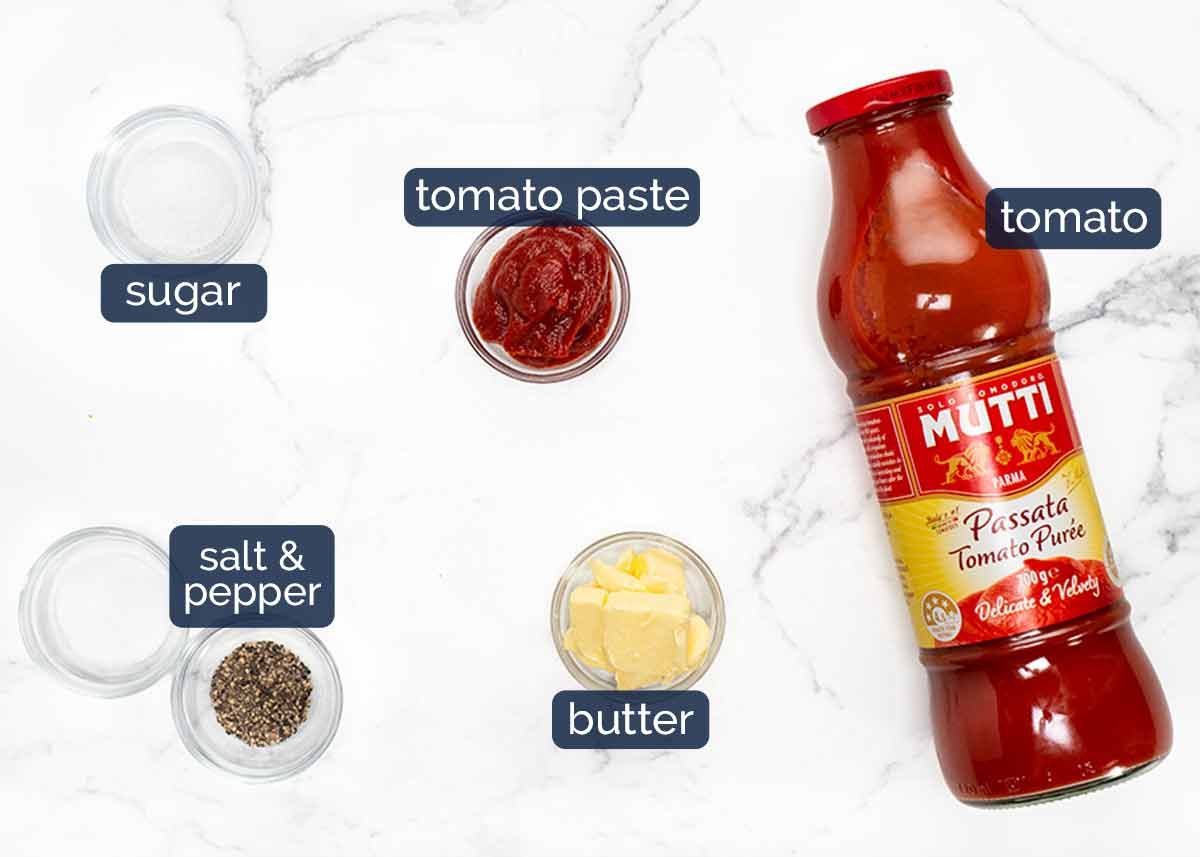
Tomato passata – Plain puréed tomato sauce with a smooth consistency, making it ideal for this quick tomato sauce. Labelled “tomato purée” in the US. Read more about tomato passata here.
Tomato paste – Adds body and colour to the sauce thanks to its concentration of flavour.
Salt – Cooking salt / kosher salt (half for table salt, 50% extra for flakes).
Pepper – Cracked black pepper.
Sugar – Tones down the tomato acidity and rounds up the flavours. Any white sugar is fine here, we only use a very small amount (1/2 teaspoon).
Butter – My French addition for a glossy finish. Not strictly traditional but it does enrich it slightly which is lovely.
How To Make Polish Cabbage Rolls (Gołąbki)
I promise Cabbage Rolls are not technically difficult – in fact, Nagi kept saying they are easier to roll than burritos! I really recommend that you watch the recipe video and take each step one at a time. There is no need to rush, and this is not a delicate recipe that requires gentle handling. This is a hearty Polish recipe, after all!
1. PrepARE the cabbage
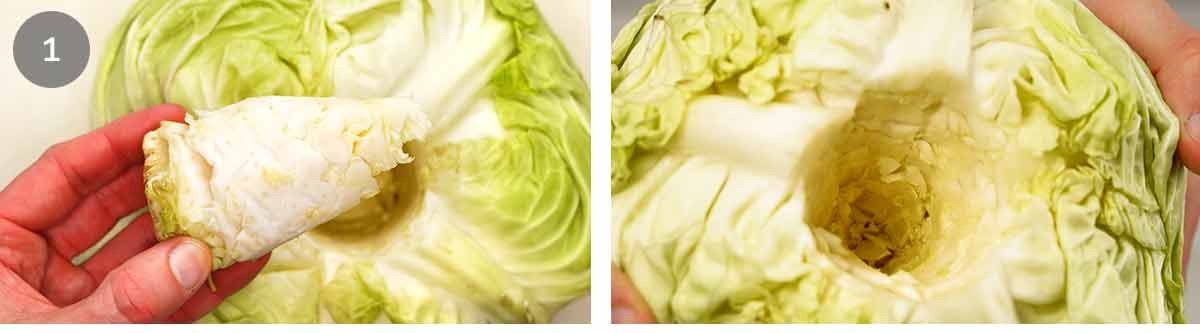
Remove the core – Start by peeling and discarding the 3 or 4 large outer leaves which are tougher and also usually a little scruffy. Then insert the tip of a small knife next to the stem on an angle towards the centre (8cm / 3″ deep) then cut a cone shape around the core and lift it out. The goal here is to remove the core so you can see the layers of cabbage inside the hole, so keep chipping away at it as needed until you can.
Cutting the core out allows the boiling water to go throughout the cabbage and soften the leaves. It is safer to cook it this way rather than peeling uncooked leaves and cooking them separately as they are prone to breaking – this will cause the filling to escape.
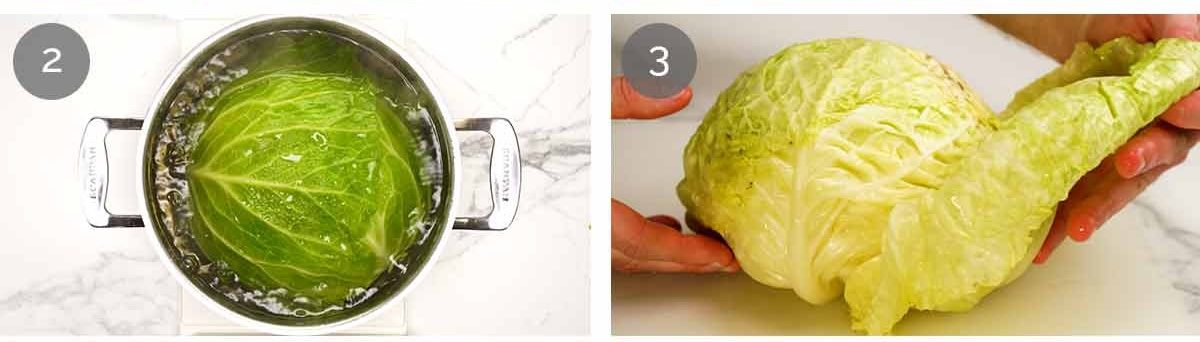
Cook the cabbage – Bring a large pot of salted water (5 litres) to a boil. Place the cabbage in core side down. Bring back to a simmer, cover with a lid and cook for 10 minutes. Remove using a spider or slotted spoon, and place it on a tray.
The cabbage should be soft all the way through with its leaves pliable enough to peel away without tearing. If there are some uncooked patches though, that’s ok – see next step.
Peel – Let the cabbage cool for 10 minutes or until you can handle it. Then carefully peel off the first 10 leaves from the cabbage. Try not to tear them, but if some of the edges tear a bit that’s ok. You just don’t want to tear any holes in the middle of the cabbage leaves as this will cause the filling to escape.
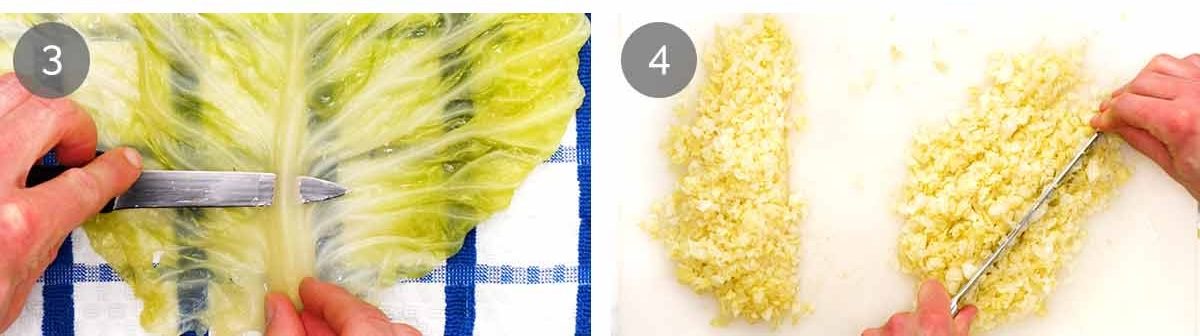
Trim leaves – Lay one cabbage leaf on a tea towel so the round part of the rib is facing up. Pat dry. Then trim off the thick part of the rib so it is level with the leaf. This makes it much easier to roll. Repeat with the remaining leaves and set aside.
Finely chop the remaining cabbage (like finely chopping an onion), then squeeze out as much water as possible using your hands. If your cabbage is a little undercooked on the inside so you don’t get much water out, that’s ok. The cabbage will cook in the next steps.
Measure out 3 tightly packed cups of the cabbage (300g/10oz), then set aside. Keep the rest to use for another purpose (it can be frozen for 3 months).
2. Stuffing and rolling
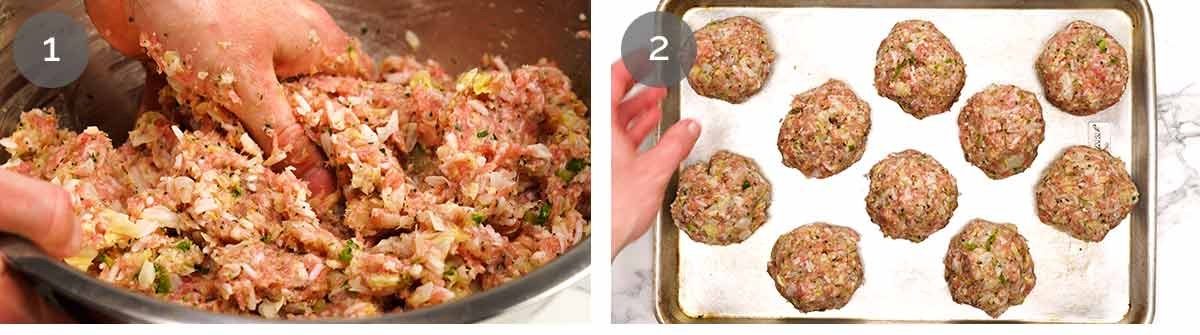
Make the stuffing – Grate the onion into a large bowl using a box grater. I know this is not typical – most recipes will just used diced onion. But I find grating it makes the filling softer because you get the benefit it of all the onion juices.
Add the panko, mix well and leave to soak in the onion juices for 1 minute. Add the remaining stuffing ingredients, including the chopped cabbage. Mix well with your hands until evenly combined.
Divide into 10 equal portions (about a heaped 1/2 cup each).
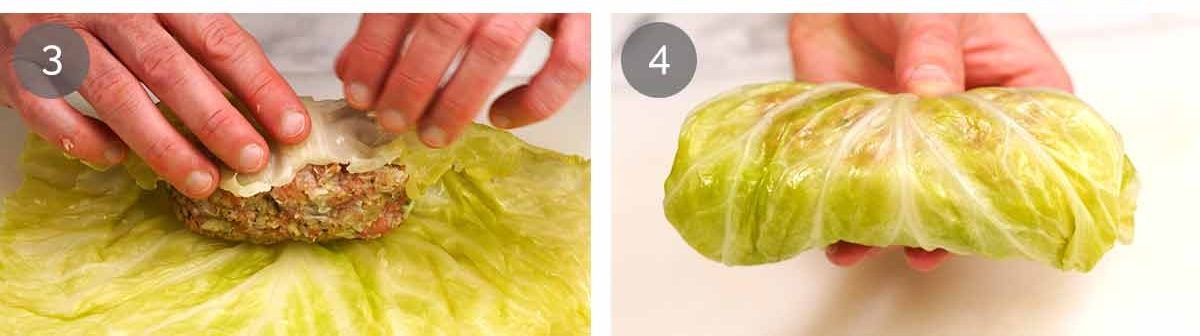
Start Rolling – Lay one cabbage leaf flat on a board, outside facing down and the stem end towards you. Shape one portion of stuffing into a 8.5cm / 3.4″ long cylinder and place it on the lower third of the leaf. Roll it up like a burrito – start from the bottom, then when you reach halfway, fold the sides in over the filling and continue tightly to enclose. (See video at X).
Finish – This is what it looks like once rolled. Place seam side down on a tray. Repeat to make 10 rolls in total.
Note: If your cabbage was smaller than 1.5kg / 3lb, then make your cabbage rolls smaller.
3. Cook, sauce & serve
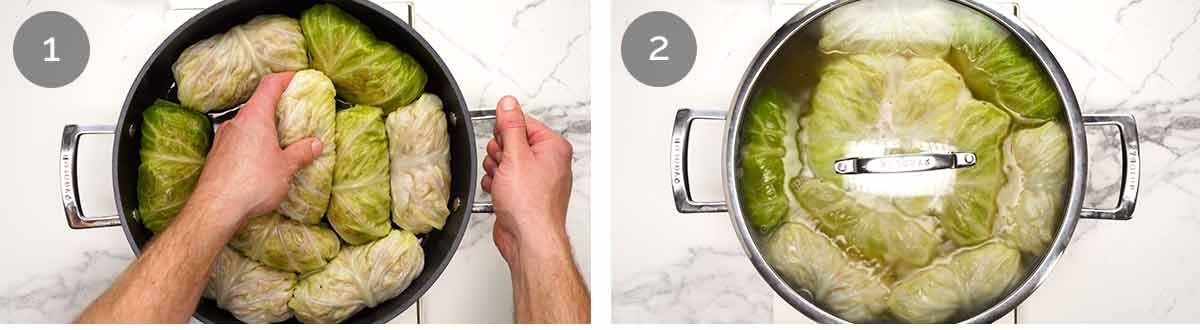
Pour 1 cup of chicken stock into a large, 30cm / 12″ deep pan. Arrange the rolls seam side down in the pan so they fit snugly together. They will fit in quite tightly.
If you don’t have a pan this size, you can also use a large pot and double stack them. But don’t triple stack as the 3rd layer may not cook through properly, it is better to cook in batches.
Pour over the remaining chicken stock, bring to a boil then reduce to a simmer. Cover and cook for 25 minutes. The internal temperature of the pork should be at least 71°C/160°F., it’s fine if it is over, the stuffing will still be soft and tender. Once cooked, carefully transfer the rolls to a tray using a slotted spoon and set aside while making the sauce.
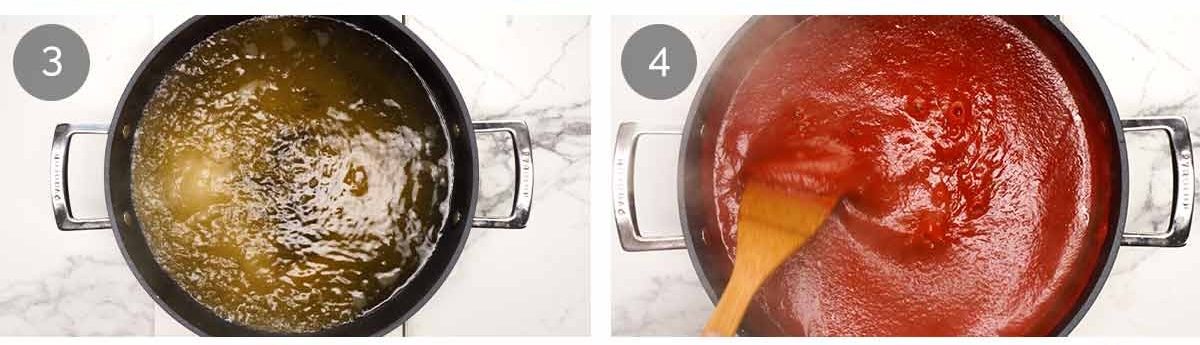
Reduce stock – Increase the heat to high and reduce the reduce stock to 1 1/2 cups (about 7 minutes). This is not a typical step for traditional Polish Cabbage Rolls, but I like to do it as it concentrates the flavour of the stock and all the lovely flavour from the cabbage and pork stays right where it belongs!
Make sauce – Add the sauce ingredients and stir to combine. Then simmer for 5 minutes until the sauce has thickened to a thin tomato pasta sauce consistency. Stir in the butter until melted.
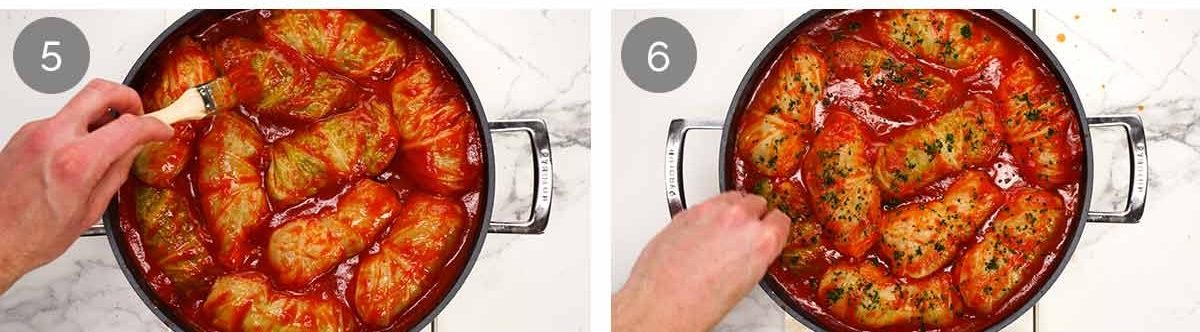
Return the rolls – Place the rolls seam side down in the sauce. Using a brush dipped in the tomato sauce, lightly brush each roll with a little sauce, just enough to give the surface a thin coating.
Reheat and serve – Bring to a simmer, reduce the heat to medium, cover and leave it for 5 minutes to slowly heat the rolls through. Remove lid, scatter with parsley and serve.
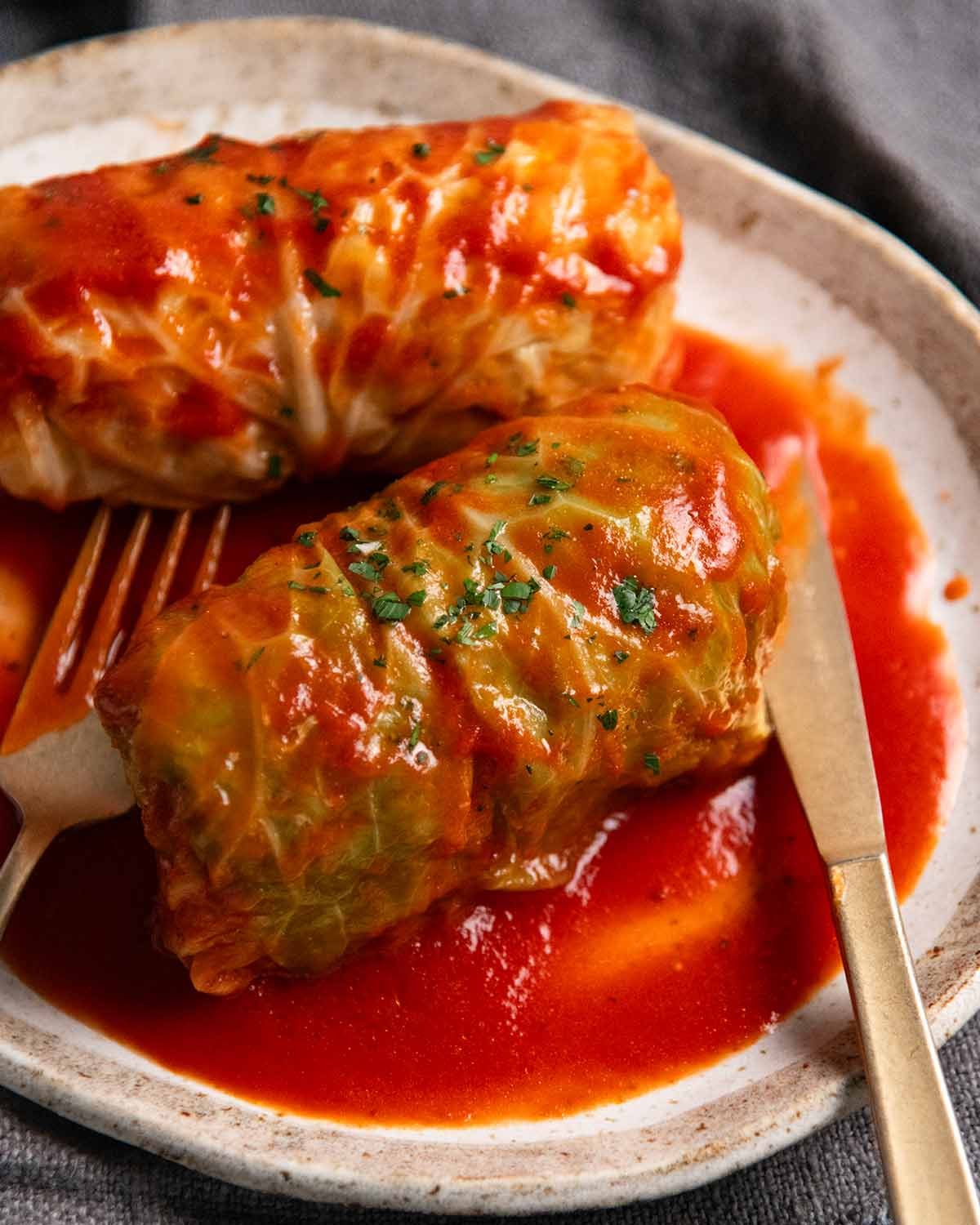
How To Serve Polish Cabbage Rolls (Gołąbki)
I like to serve these straight from the pan, spooning plenty of sauce over each roll. Traditionally served with potato, usually mashed but these lovely baby potatoes with herbs are lovely with it too. If you like your green vegetables, try it with garlic green beans.
I personally enjoy them simply on their own, so I can really appreciate the full flavour of the dish. But whichever ways you fancy them, I’d love to hear your feedback! Enjoy and bon appétit! – JB
FAQ – Polish Cabbage Rolls (Gołąbki)
Yes. Regular green cabbage works well and is also traditionally used for gołąbki. I prefer Savoy because its leaves are a little softer and more flexible, which makes them easier to separate and roll. Whichever you use, look for a cabbage around 1.5kg / 3lb so the leaves are large enough for the rolls.
Yes. Beef, chicken or turkey will all work, or you can use a mixture of pork and beef. Pork is my preference because it gives you the softest, juiciest filling. Beef will make it a little firmer with a meatier flavour, while chicken and turkey are leaner so the filling won’t be quite as succulent.
Because it makes life much easier! Raw cabbage leaves are stiff and can tear when you try to peel them away from the head. Removing the core and briefly cooking the whole cabbage softens the leaves so they peel away much more easily and become flexible enough to roll.
Yes, you can prepare and cook the cabbage rolls, refrigerate them in their sauce, then gently reheat them when needed.
Yes, once completely cool, freeze the cooked cabbage rolls with their sauce in an airtight container for up to 3 months. Thaw overnight in the fridge, then reheat gently in a covered pan on the stove.
This recipe has been developed specifically for cooking on the stove, where the rolls gently simmer in the chicken stock and the same stock can then be reduced to make the tomato sauce. So for the best result, I recommend sticking with the stovetop method.
Watch How To Make It
Hungry for more? Subscribe to my newsletter and follow along on Facebook, Pinterest and Instagram for all of the latest updates.

Polish Cabbage Rolls (Golabki)
Ingredients
- 1 head savoy cabbage or green cabbage , ~1.5kg / 3lbs (Note 1)
- 1 tbsp cooking salt / kosher salt , for cooking water (half for table salt, +50% for flakes)
- 4 cups chicken stock / broth , low-sodium (homemade if you want), or vegetable stock
Stuffing
- 700g / 25oz pork mince (ground pork), preferably not lean (Note 2)
- 1 large brown onion , peeled and kept whole
- 1 1/2 cup panko breadcrumbs , substitute regular breadcrumbs
- 2 cups cooked white rice
- 2 large eggs , (~55g/2oz shell-on weight)
- 3 garlic cloves , crushed using garlic press
- 1 tbsp dried marjoram , or half the amount of dried oregano
- 2 1/2 tsp cooking salt / kosher salt , (half for table salt, +50% for flakes)
- 1 tsp black pepper
- 2 tbsp finely chopped parsley
Tomato sauce
- 700g / 24oz tomato passata (US: pureed tomato) (Note 3)
- 1 1/2 tbsp tomato paste
- 1/2 tsp cooking salt / kosher salt , (half for table salt, +50% for flakes)
- 1/4 tsp black pepper
- 1/2 tsp white sugar
- 30g / 2 tbsp unsalted butter , cut into a few pieces
Garnish
- 1/2 tbsp finely chopped parsley
Instructions
Abbreviated Recipe
- Trim, core and boil cabbage 10 min. Peel 10 leaves, pat dry, trim ribs to flatten. Chop remaining cabbage. Mix stuffing, roll into cabbage rolls. Cook in chicken stock 25 min, remove, reduce stock to 1 1/2 cups. Add tomato sauce ingredients, simmer to reduce 5 min, put rolls back in to reheat 5 min. Serve.
Full Recipe
Prep cabbage
- Core – Peel and discard the 3 or 4 big outer leaves from cabbage (too thick and usually scruffy). Remove the core by cutting a cone shaped piece around it using a small sharp knife. Insert it next to the stem on an angle towards the centre (8cm / 3" deep), cut a cone shape around the core and lift it out. (See video, it's helpful). Goal – You can see the cabbage layers inside the hole, rather than the core. (Note 4)
- Cook cabbage – Bring 5 litres (5 quarts) of water to a boil in a large pot. Add salt and carefully place the cabbage in, core side down. Bring the water back to a boil, turn it down to a simmer, cover with a lid and cook for 10 minutes. Remove the cabbage (use a spider or slotted spoon) and place on a tray.
- Peel leaves – Let the cabbage cool for 10 minutes or until it can be handled. Carefully peel off the first 10 leaves of the cabbage. Try not to tear them though if they doing a bit on the edges, that's ok. You don't want holes in the centre though as the filling will escape.The leaves should be just cooked enough that they are pliable and don't break when bent. If there are uncooked patches, just dunk those leaves briefly back into the pot – it will only take 30 seconds or so.
- Trim leaves – Lay one leaf flat on a tea towel so the round part of the thick rib (stem) is facing up. Pat dry well, then using a sharp knife, cut off the thick part of the rib so it is flush with the rest of the leaf, so it’s easier to roll. Repeat with the others leaves and set aside.
- Finely chop the rest of the cabbage (~5mm/0.2"), like dicing an onion. Squeeze out excess water using your hands (just whatever comes out), and set aside in a bowl.
Prep stuffing
- Make filling – Grate the onion using a box grater into a large bowl. Add the panko and mix well. Let it soak for 1 minute. Add all the remaining ingredients, plus 3 tightly packed cups of the chopped cabbage (300g/10oz). Mix well with your hands until combined.
- Divide the stuffing into 10 equal parts (1 portion = 1 heaped 1/2 cup) and set aside.
Making rolls and cooking
- Roll – Lay one cabbage leaf flat on a board, with the outside side facing down and the stem towards you. Shape one portion of the stuffing into a 8.5cm / 3.4" long cylinder and place it on the lower third of the cabbage leaf. Start rolling from the bottom, folding in the sides when you're halfway, then finish rolling up tightly, finished seam side down. See video at X. Repeat with remaining rolls.
- Cook rolls – Pour 1 cup of chicken stock into a large (30cm / 12") deep pan. Place the rolls in the pan seam sides down, they should fit tightly. Pour over remaining chicken stock. Bring to a simmer on medium high then turn it down slightly to medium to a gentle simmer, cover with a lid and cook for 25 minutes. (The internal temperature should be at least 71°C / 160°F). Carefully remove the rolls using a slotted spoon onto a tray and set aside.
Making sauce and serve
- Sauce – Reduce the chicken stock left in the pan on high heat down to 1 1/2 cups (~ 7 minutes). Add passata, tomato paste, salt, pepper and sugar. Stir to combine, turn the heat down to medium/medium high so it's bubbling gently and reduce for 5 minutes, stirring every now and then, until the sauce thickens into a thin tomato pasta sauce consistency. Stir in butter until melted.
- Add rolls – Place the cabbage rolls seam side down into the sauce. Dip a brush into the sauce in the pan and brush some on top of each roll, just enough to give the surface a thin coating.
- Warm cabbage rolls – Once the sauce starts simmering around the edges of the cabbage, turn the heat down to medium, cover with a lid and let the cabbage rolls warm through for 5 minutes. Remove the lid, scatter with parsley and serve.
Recipe Notes:

Nutrition Information:
Life Of Jaffle
I’ve spent all this time making beautiful Polish cabbage rolls, meanwhile Jaffle is happily chewing on a wooden stick 😂. Now, I wouldn’t have let him eat the rolls anyway, but come on… not even a little sniff?? Apparently the stick is far more interesting. Not sure how I should take that! 🤣


My grandmother was Polish and I have made these for decades. The only difference is I use ground beef and I tie the rolls with a piece of string to prevent them from coming apart. They freeze and reheat very well.
My grandmother was Polish and I have made these for decades. The only difference is I use ground beef and I tie the rolls with a piece of string to prevent them from coming apart.
Hi Brian, I love hearing how everyone’s family made them a little differently! The string is a clever trick, though I found these hold together really well once they’re rolled and tucked into the pan.
Any suggestions for a vegetarian filling instead of meat?
Yes, you can use chopped mushrooms instead of meat. I fry them lightly with onions and then mixed with half cooked rice. They are really tasty.
Hi Joanna, as Elizabeth commented, I’d replace the meat with finely chopped mushrooms, cooked down really well until they’ve released their moisture, then mix them with the rice, onion and breadcrumbs. You could add some cooked lentils as well for a little more texture and change the chicken stock to vegetable stock.
These are lovely! An ex boyfriends Polish mother used to make these & they were always devoured so quickly. Those she could not fit in the pot with tomato sauce & she always made extra, were cooked in stock then fried up in butter drizzled with a little soy sauce. Equally delicious!
Hi Sue, fried in butter with a little soy sauce, that sounds seriously good! I’m learning so many different ways of eating cabbage rolls from these comments!
I used to make these in the 70’s!!! Now I’m looking forward to making them again!!!!
Thanks Debra, I really hope you like them 🙂
I grew up eating these and am excited to make them for my 91 year old dad!
Hi Stacey, I sure want to know from your dad’s opinion!
A modern twist on the traditional holubsti, Both my Babas as all true Ukrainians stuffed them with only rice, onions on Xmas Eve as one of the twelve meatless dishes and then with pork/rice Xmas day. They were always made small (4-5, out of one leaf) They never used beef as only the wealthy could afford it. Always, made with pork. Also the cabbage was usually cooked in vinegar water to sour the cabbage first. And always baked, less fuss than on the stove. Thankyou for your version, looks good as well.
Hi Sami, thank you for sharing this! It’s a lovely family tradition and your Babas version sounds excellent!
Hi, these look very tasty! I had similar when traveling in the 5 Stans! They did not use bread (I am coeliac so this matters), unusually, as every single meal was served with bread!
Is it necessary to use breadcrumbs or could I use another grain, or more rice, just as effectively please?
Hi Susi, the breadcrumbs help keep the filling tender rather than dense, but you can absolutely make these gluten-free. I’d use gluten-free breadcrumbs in exactly the same quantity, that will give you the closest result to my recipe. As you mentioned, you could also try a little extra cooked rice instead, though the texture of the filling will be slightly different. Hope you enjoy them!
This Pole approves! My grandmother always grated the onions as well 😉 I was never a big fan of cabbage, so I peeled off the leaves, but absolutely loved the filling. At my house we normally skipped the tomato sauce and used the remaining stock as a base for soup, but I know many staunch supporters of the tomato version. You should also know that there’s a big regional battle in Poland between those who put rice in their gołąbki and those who swear that it means your meat was no good 😅
A Polish approval, I’ll happily take that! I had no idea rice in gołąbki could be such a controversial subject! I seem to have stepped into dangerous territory with this recipe. 😂
Very excited to try your recipe JB! I ate these cabbage rolls a lot when backpacking in Europe and have had them on my ‘to find a recipe list’ for several years. I even have a quiet weekend to give them a try this weekend 😊
Thank you Hannah, I hope the recipe fits your expectations, let me know!
I live alone and would not cook a hole cabbage!
Will cook a few separated leaves and hope for the best..
All recipes are tempting but trying to reduce them…a challenge.
I notice the little boy…not so little anymore…
This one is very easy to freeze for many meals later on
Hi Michele, I completely understand, a whole cabbage makes a lot of rolls when you’re cooking for one! A few carefully separated leaves should work just fine, and you can easily make a smaller batch of the filling and sauce too. 😊
OMG I have been looking for a traditional recipe for Polish cabbage rolls since I was a child! My best friend as a child was a Polish immigrant. Her Mother used to make them and I would race over to her house every time she did. Back in 1969 my family only served Meat and 3 veg with the occasional Chinese take away.
You can imagine how delicious they were to me. I have made them over the years for my Family and they do like them but I could never quite work out what herb was used.
I’ll be cooking this this weekend. Thank you J B
Hi leanne, thank you for sharing, I really hope this recipe brings back the flavour you remember from your friend’s mum all those years ago. Please let me know how you go this weekend!
Just two observations or suggestions:
1)One cabbage option is using a wombok,
2)If using the whole cabbage why, not freeze it will allow you to pull it apart when thawed. However you miss out on blanching in salted water
Hi Lazare, thank you for the suggestions. Wombok could certainly be an interesting alternative. I’ve also heard of freezing the whole cabbage to soften the leaves, it does work, but depending on how long you leave it in the freezer, it can damage the cell structure, so once thawed the leaves can be a little more fragile. I went with blanching because it’s reliable and as you mentioned, it seasons the cabbage at the same time.
Cabbage Rolls were one of my favourite food discovery highlights in Poland last year, super excited to make them after reading this. Another delicious Polish discovery was sour cherry perogi with sweetened sour cream, should you be looking for your next dish creation, JB!
Hi Bea, I hope these bring back some good memories of your trip to Poland! Thank you!
JB you are amazing. My Polish mother who passed 2 years ago at age 94 was an amazing cook. I have mastered a cheats version of her Pierogi (meat and sauerkraut- no other fillings for her), a delicious Rosół (chicken soup), ogórkowa Zupa (dill cucumber soup – NO vinegar! Brine, garlic and dill are the only ogórki you should eat!) and Kartoflana sałata (Polish potato salad), but gołąbki have been my downfall. I can do her amazing tomato sauce (lick your plate clean sauce – she only cooked them in stock and served them with the sauce) but the gołąbki were too hard so I resorted to Nagi’s meatloaf, my mum’s mash (sour cream & salt only, Brussels sprouts and the sauce to get my fix. I can’t wait to make these your way (but will still make my Mum’s sauce to serve – very similar but more butter, flour to thicken and red wine vinegar). I was in tears reading this. Thank you so much! ❤️
Basia, this really touched me. Thank you so much for sharing the story of your mum and her cooking. It sounds like she left you with some wonderful recipes and, even more importantly, wonderful memories around them. I really hope my method finally helps you conquer the gołąbki!
I’m Ukrainian and was very happy to see you made this. We also called them Holubtsi. My mum used to make them and your recipe is very close to how she made it and how I make them. My only tip is when I serve them with the sauce I drizzle a little thickened cream on top. It’s delicious.
Thanks Elizabeth, I couldn’t ask for a better compliment! I’ll have to try with cream next time 🙂
Delicious.
Thank you!
Yummm, thanks for sharing JB. As an Eastern Euro-Aussie this makes me happy that dishes from our region are getting spotlighted. Especially when you can’t visit Europe often, it’s a delight that we can share and make these recipes here 😁 Cannot wait to try your recipe! This dish has a lot of history across Eastern Europe
Hi Emma, thank you, I’ve really enjoyed reading all the comments and learning how much history and tradition there is around cabbage rolls across Eastern Europe. Food is a wonderful way to stay connected to home. I hope you love my version!
My hubbie the cook is going to make these – they are the best cabbage recipe I have see in years!!!! Thank you so much. And love the photos of Jaffle – he is a real sweetie…..
Hi Mandy, I hope your husband enjoys making them and, more importantly, that you both enjoy eating them! Thank you!
Thank you thank you thank you for this recipe! I can’t wait to make it- one of my favourite dishes. I last ate it in Krakow in the exquisite main square. But I have eaten it very happily in other parts of Europe. An absolutely star dish!
Thank you Kate, I really hope you like my version!