
Here is a quick Beef Rice Noodle stir fry with nice meaty pieces of beef, tenderised so they are beautifully succulent, never overcooked. Even if you cook for way longer than you should!
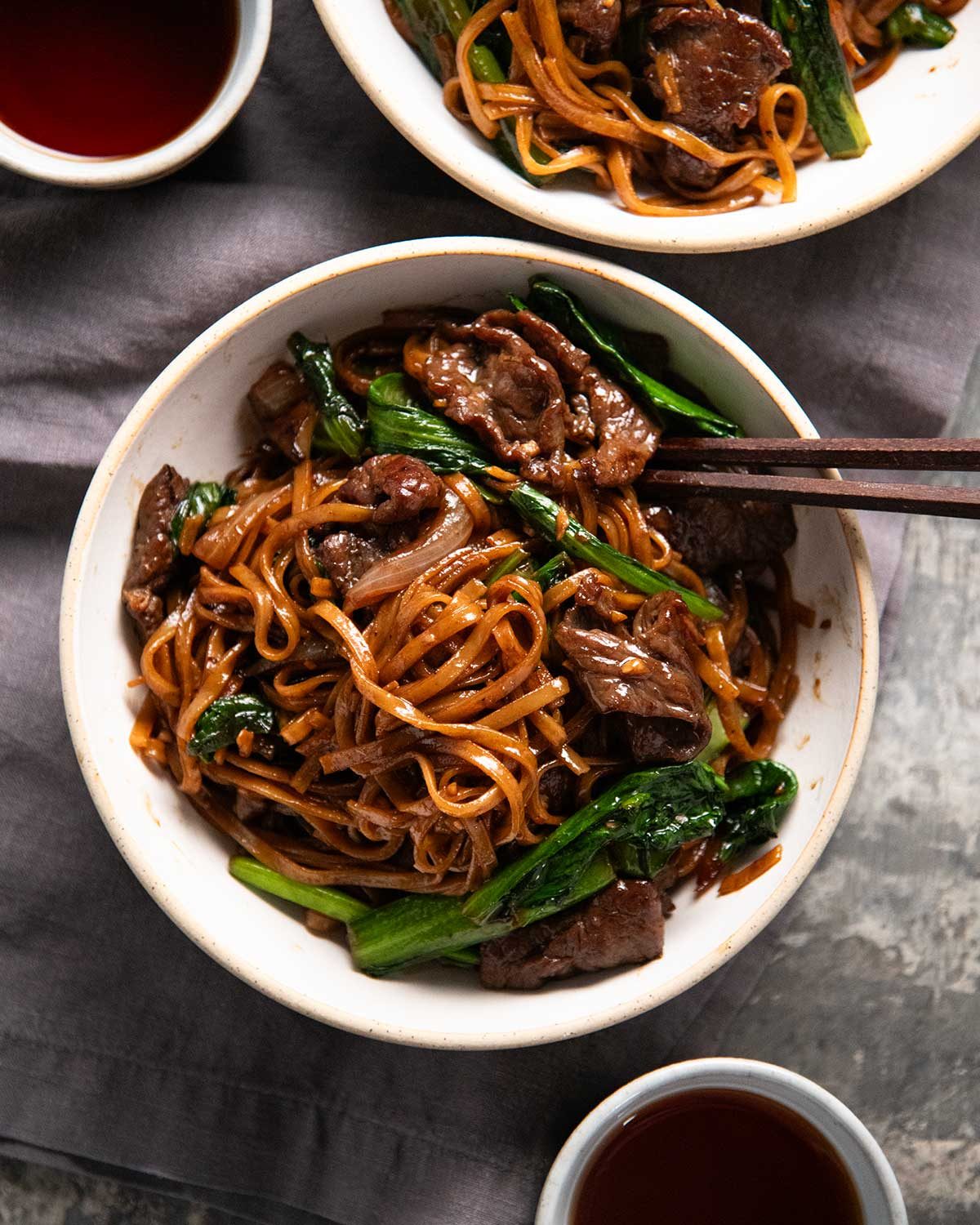
Beef Rice Noodle Stir Fry
Here is a quick noodle stir fry for you that is made using dried rice noodle sticks. I know you’ve got a packet lurking in the back of your pantry somewhere! 🙂 They come in all sorts of thickness, from Pad See Ew wide ones to thinner Pad Thai ones (that’s what I used), and the very thin vermicelli rice noodles like in Singapore Noodles. I’ve provided quantities for all – you’ll be surprised how much it varies!
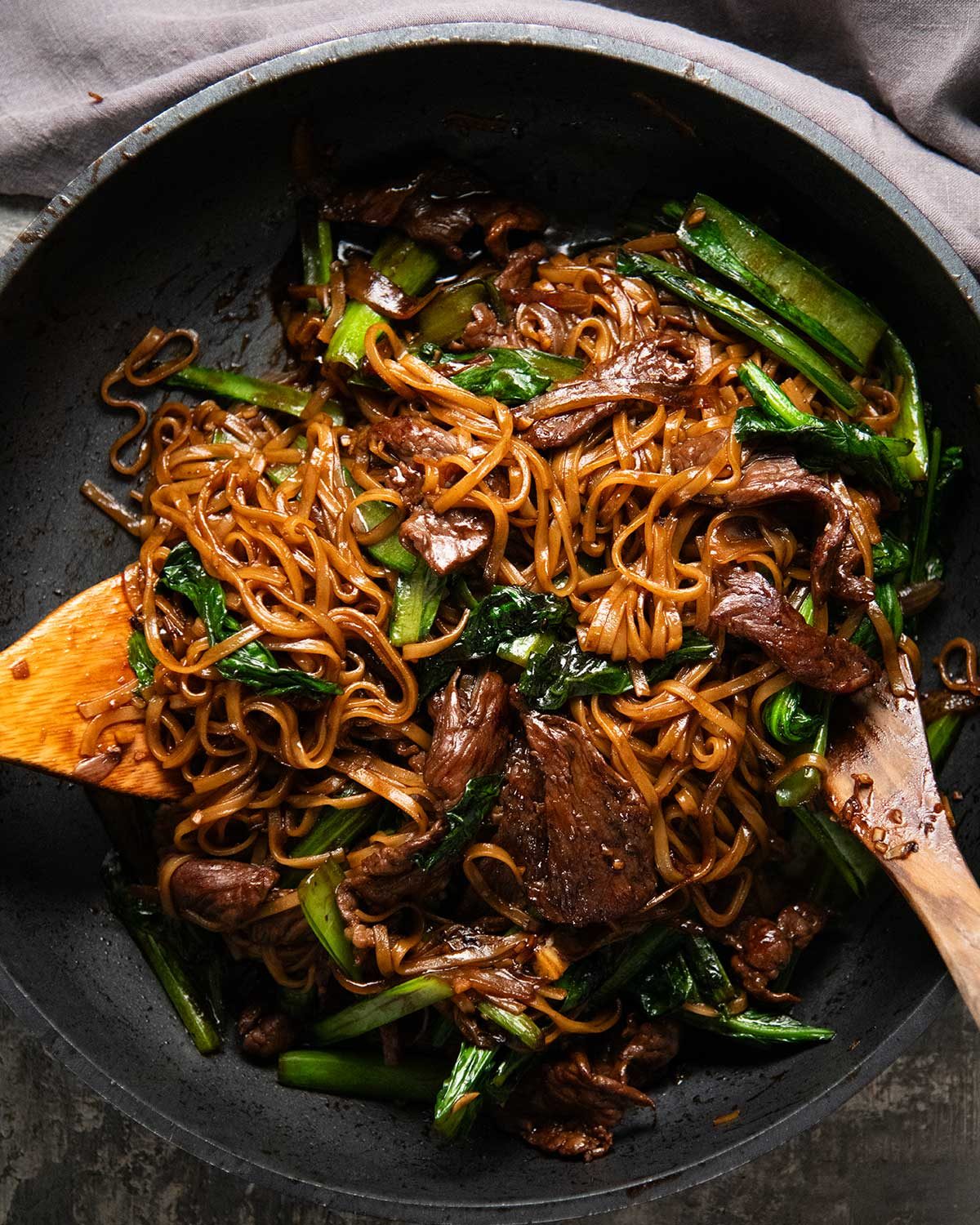
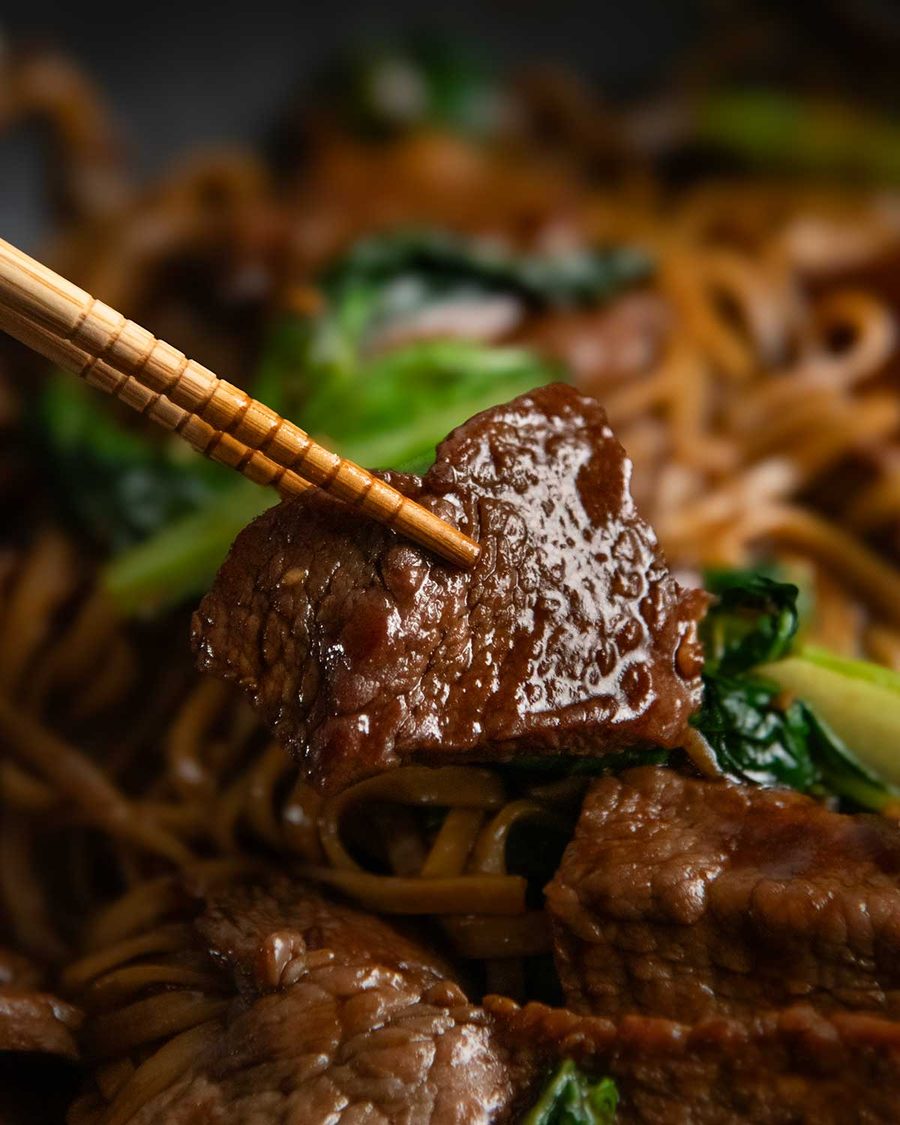
The star today though are the meaty pieces of beef that are tangled up in the noodles. They’re tenderised using a simple Chinese restaurant trick called velveting, where the beef is tossed with a little baking soda before cooking. Thinly sliced beef goes from juicy to chewy and overcooked in 90 seconds, even using expensive steak like scotch fillet (rib eye) marbled with fat.
But velvet the beef and it’s a completely different story. Even economical cuts stay beautifully tender and succulent – you can have a thin slice of beef on the stove for 10 minutes and it’ll still be juicy! It’s the secret behind the tender beef in the stir fries at your favourite Chinese restaurant.
Ingredients in Beef Rice Noodles
Here’s what you need to make this rice noodle stir fry. Plenty of options for beef cuts, noodles, and the vegetables!
1. Tenderised beef
A tiny sprinkle of baking soda is the secret to tenderising beef slices so they stay succulent. Paper thin slices of beef cook in 90 seconds whereas noodle stir fries take around 8 minutes. Fast, but the beef is still overcooked which means it’s chewy and tough. So tenderising is essential, in my books!
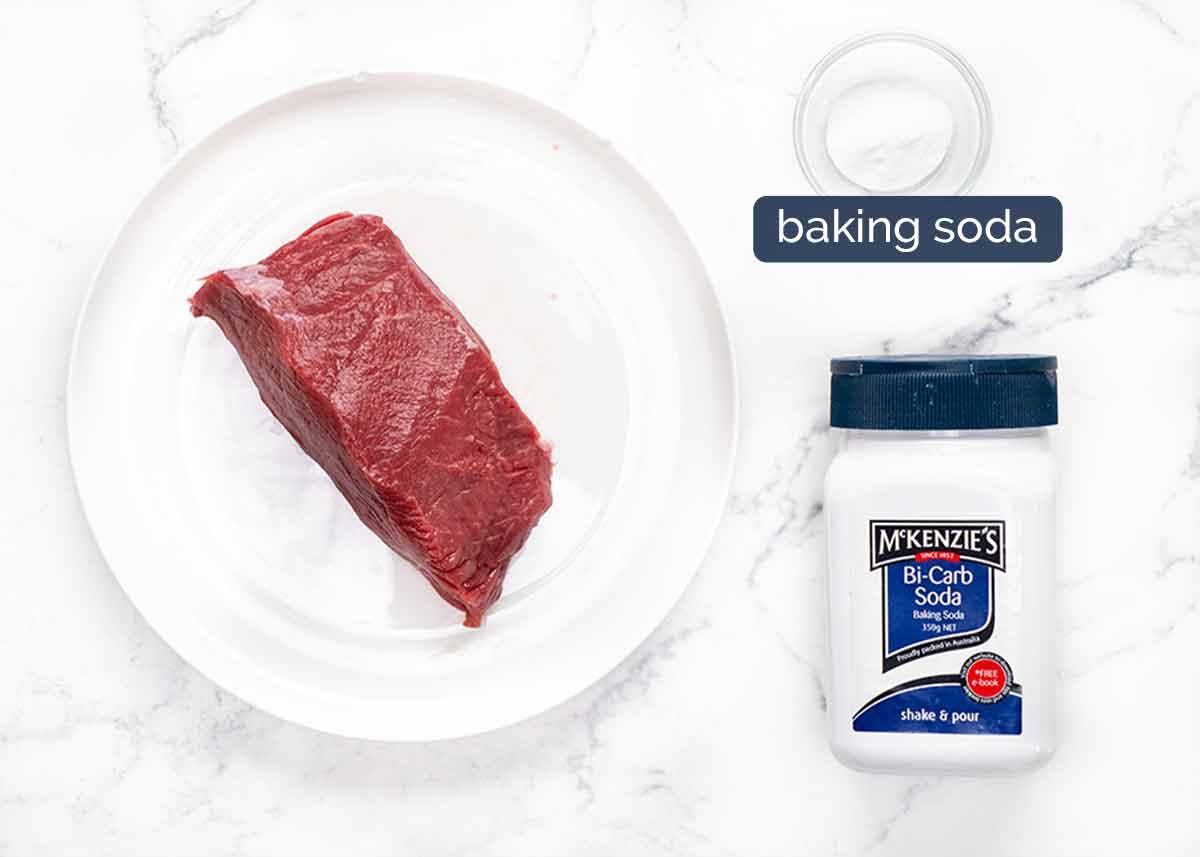
Baking soda – A small amount (just 1/2 teaspoon) mixed with the beef tenderises it so it stays soft. Without, the beef will overcook and become tough. A tried and proven Chinese restaurant tenderising method called velveting used liberally in my Asian recipes! More on velveting here.
Rump steak (top sirloin) – This is my default cut of beef for stir fries , because it has good beefy flavour, it’s juicy and not as pricey as other steak cuts like scotch/rib-eye and porterhouse /New York strip. If I get a nice scotch fillet, it kind of feels like a waste to use it for a stir fry! I like to get a rump roast which is better value than steaks, then portion and freeze. This is what is pictured above. Other beef rump roast and steak cuts are also great – rump cap (also called picanha/coulotte), sirloin cap.
Next choice – Top side (US: top round) is probably my next choice for value for money (especially if you get a roast and cut it up), and flank is excellent too – really great beefy flavour. Though South American cuts are starting to creep up in price here in Australia so I tend not to use them for stir fries.
Slow cooking cuts – like chuck, oyster blade, gravy beef and blade can also be used, they just need to be tenderised for longer. Directions in the recipe card!
yes, you can use chicken instead!
Use 250g/8oz boneless chickens thighs – a little more because the sauce is one I made with beef in mind which has a stronger flavour. If using breast, also use 250g/8oz and tenderise it using the same directions and baking soda amount as the beef in this recipe.
2. FOR THE NOODLE STIR FRY
And here’s what goes into the stir fry.
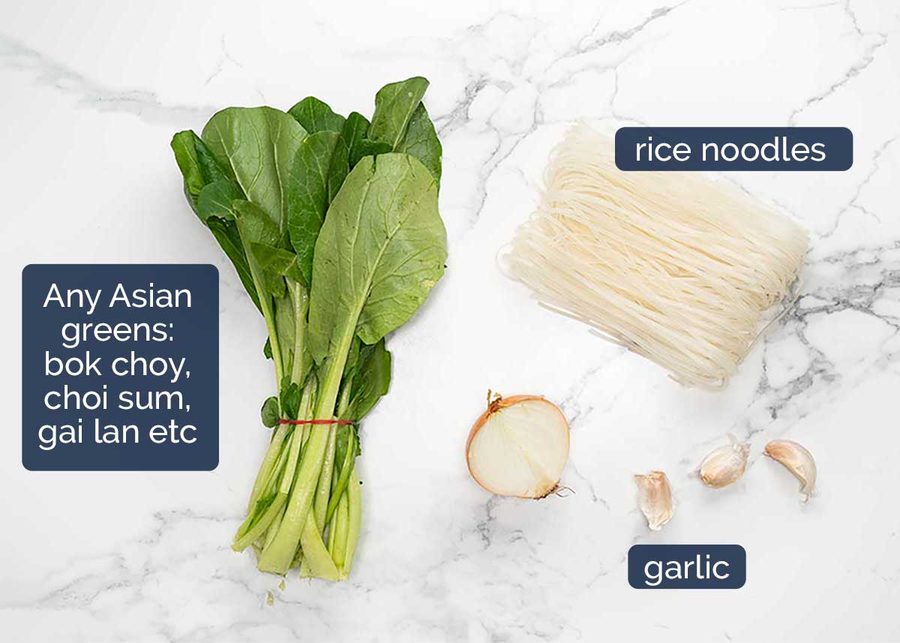
Rice noodles – Dried rice noodles are a staple in my pantry. They last *forever*, they’re cheap, and they’re incredibly versatile. I use Pad Thai thickness noodles (~3m / 1/8″ wide when dried), but you can use any width for this stir fry though the quantity needed will vary. As a rule of thumb, the thinner the noodles, the less you need by weight because they bulk up more once soaked. Thinner noodles also have more surface area for the sauce to coat, so using too much can dilute the flavour.
The quantity to use for different rice noodles is specified in the recipe card notes.
Leafy Asian Greens – Use any! Bok choy, choy sum, gai lan (Chinese broccoli), or even English spinach. I use bok choy in the recipe video and choi sum is pictured above.
To prepare, trim off and discard the scruffy ends. Cut into 5cm/2″ pieces, separating the stems from the leafy part as they go into the pan at different times (stems take longer to cook). Also, cut thicker / wider stems in half lengthways so they are all roughly the same thickness.
Garlic and onion – Just half an onion, plus 3 big garlic cloves – for good garlicky flavour!
3. THE SAUCE
And here is what you need for the sauce. The oyster sauce does a lot of heavy lifting here, adding savouriness, sweetness and depth of flavour.
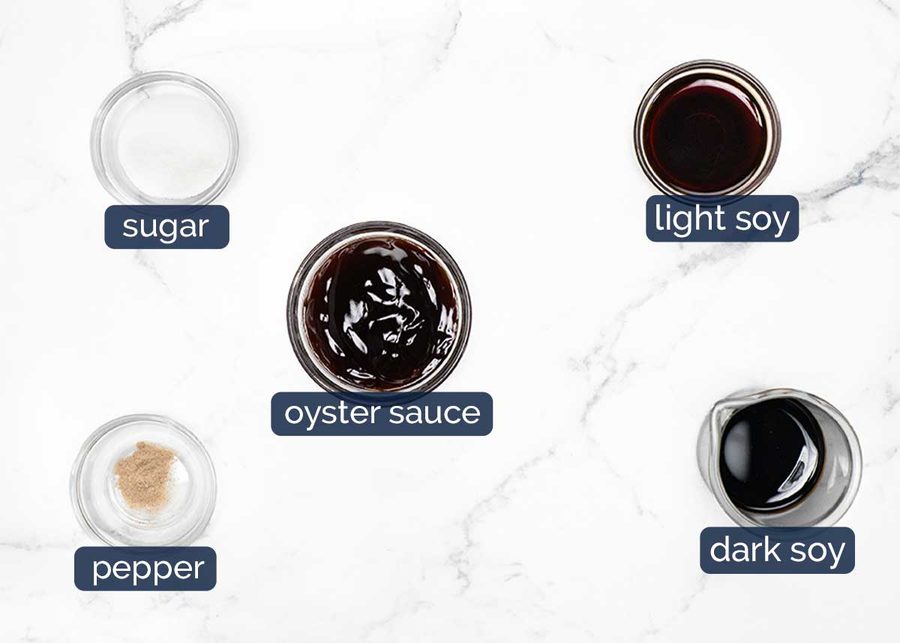
Light and dark soy sauce – The light soy sauce adds saltiness without staining the noodles a lovely brown colour while the dark soy adds soy flavour and colours the noodles, as well as some saltiness. You can substitute the dark soy sauce with more light soy sauce, though the noodles will be paler, but do not substitute the light soy with more dark soy sauce as it will be far too intense. Your noodles will become black!
The light soy sauce can be substituted with any all-purpose soy sauce or tamari.
Oyster sauce – A staple Asian sauce that adds complexity, sweetness, flavour and umami all at once. Made from oyster extract that is sweet, salty, thick and pungent, but doesn’t taste oyster-y or fishy at all once cooked. Can be substituted with shellfish free alternative – vegetarian “oyster” sauce, even found at regular grocery stores these days.
Sugar – To balance the salt in the sauce. You can substitute with honey or maple syrup, if you want.
White pepper – White rather than black pepper is typical of Asian cooking, but black pepper can be used.
How to make Beef Rice Noodle Stir Fry
Here is how to make this rice noodle stir fry. TOP TIP: Soak the noodles just before you’re ready to cook. If you leave them lying around for a while, they are much more prone to breaking in the pan.
1. Tenderise beef
Tenderise the beef first. Once tenderised and ready to cook, it can sit around as long as needed – even overnight in the fridge.
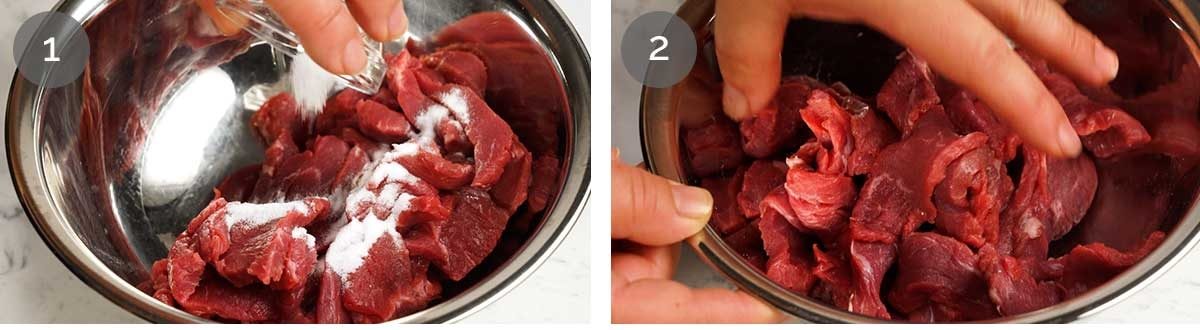
Tenderise – Sprinkle the beef with the baking soda then use your fingertips to coat the beef in it, separating the pieces with your fingertips. You might feel like there’s not enough baking soda but have faith, as you toss the beef around with your fingers and separate the pieces, it is spreading from piece to piece.
Leave for 20 minutes to tenderise. The beef will turn a bright red. If you put your ear close to the beef, you will hear faint fizzing – the baking soda in action! The beef will be ok if you leave it for a bit longer but if you leave it for hours longer, it will become too tenderised and overly soft. Still edible though!
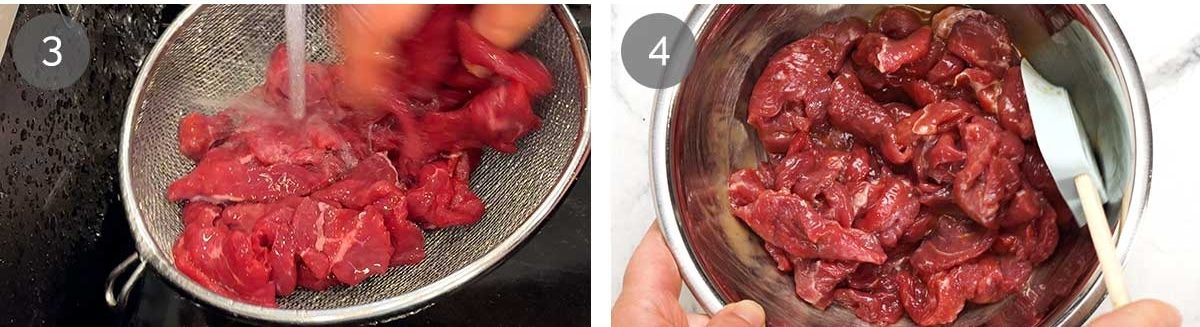
Rinse the beef in a colander to get the baking soda off. You don’t need to be super thorough, if there’s a bit left you won’t taste it and it won’t do you any harm (in fact, in some recipes where less baking soda is used and it’s marinated for longer, it doesn’t get rinsed off). Shake off excess water then pat off excess water with a paper towel. It doesn’t need to be dry, you just don’t want it soaking wet.
Season – Put it into a bowl, add soy sauce and mix. Then set aside. It doesn’t need marinating time – the beef is thin and the sauce has stacks of flavour. The soy sauce is just to add some flavour onto the beef.
2. stir fry
As with most stir fries, this one moves fast once you start to cook. So make sure everything is chopped, ready to toss into the pan or wok!
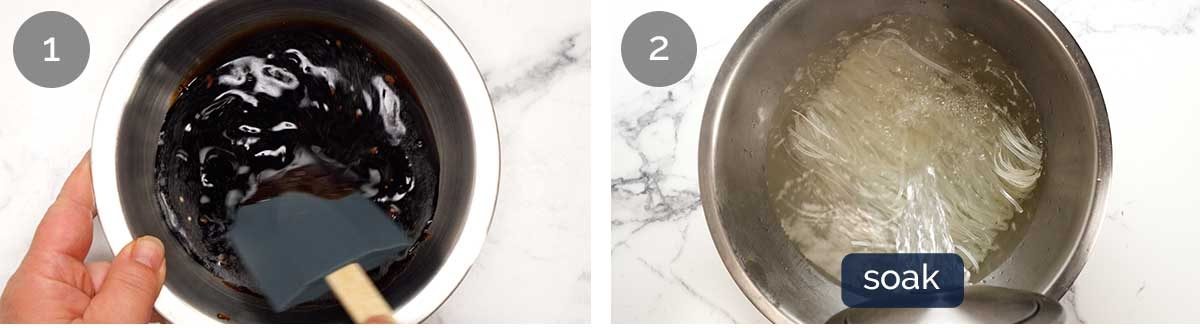
Sauce – Mix the ingredients in a bowl.
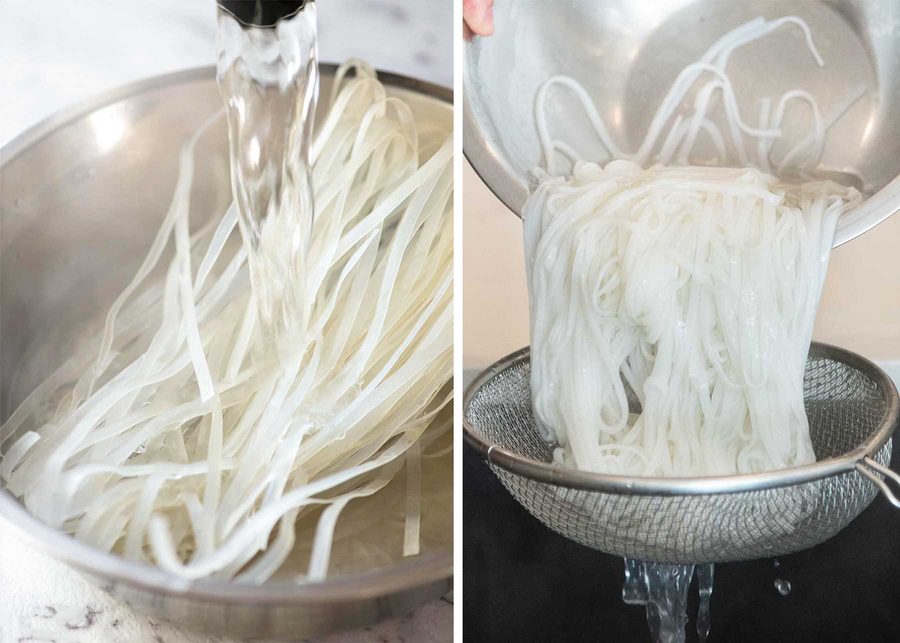
Soak noodles *just before cooking* – Prepare the noodles per the packet directions. Usually they say to soak in boiling water for 10 minutes. I find soaking rather than cooking in boiling water makes the rice noodles less fragile.
TIP: Only soak the noodles when you are ready to cook. If you leave the noodles lying around once they have been soaked, they dry out and will break more when cooking.
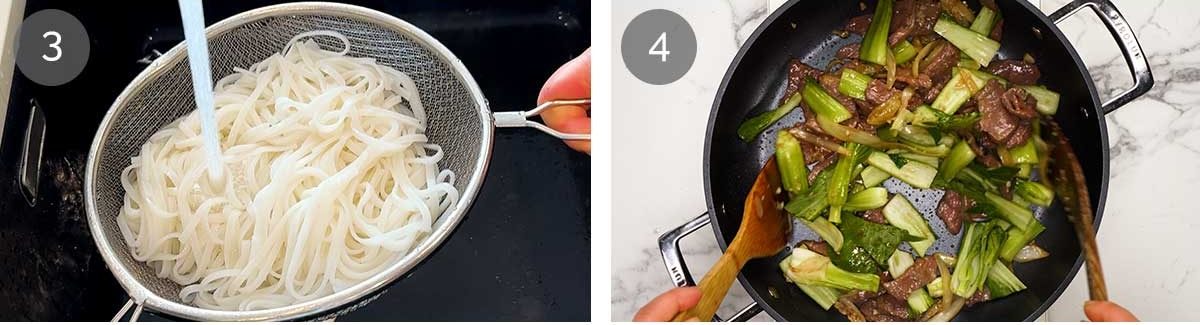
Rinse – Drain the noodles then rinse under tap water to remove excess starch. This will stop the noodles from becoming gluey when cooking.
Cook – Heat the oil over high heat in a wok or a large deep pan (skillet). Cook the onion first for 30 seconds, then the beef. When most of the red has turned brown, add the garlic and cook until the beef is no longer red. Then toss the stems of the Asian greens for 1 minute.
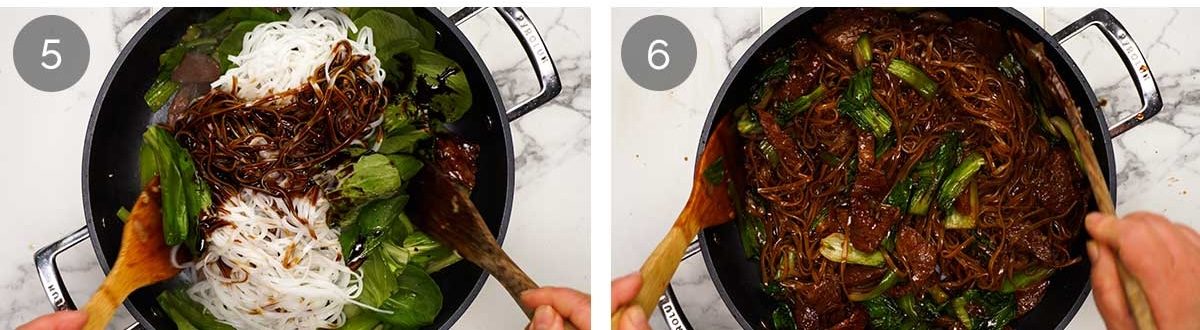
Everything else – Add (in this order) all the leafy part of the greens, then noodles (so it weighs down the greens), then sauce.
Toss well for 1 1/2 to 2 minutes, de-tangling the noodles as you go, until the sauce has coated all the noodles. There should be no sauce left in the base of the pan and the leafy part of the greens should be wilted. Then serve immediately!
TIP: Rice noodles are more fragile than wheat noodles / egg noodles, so if you keep tossing excessively and unnecessarily, they will start to break. So stop tossing once all the sauce is coating the noodles!
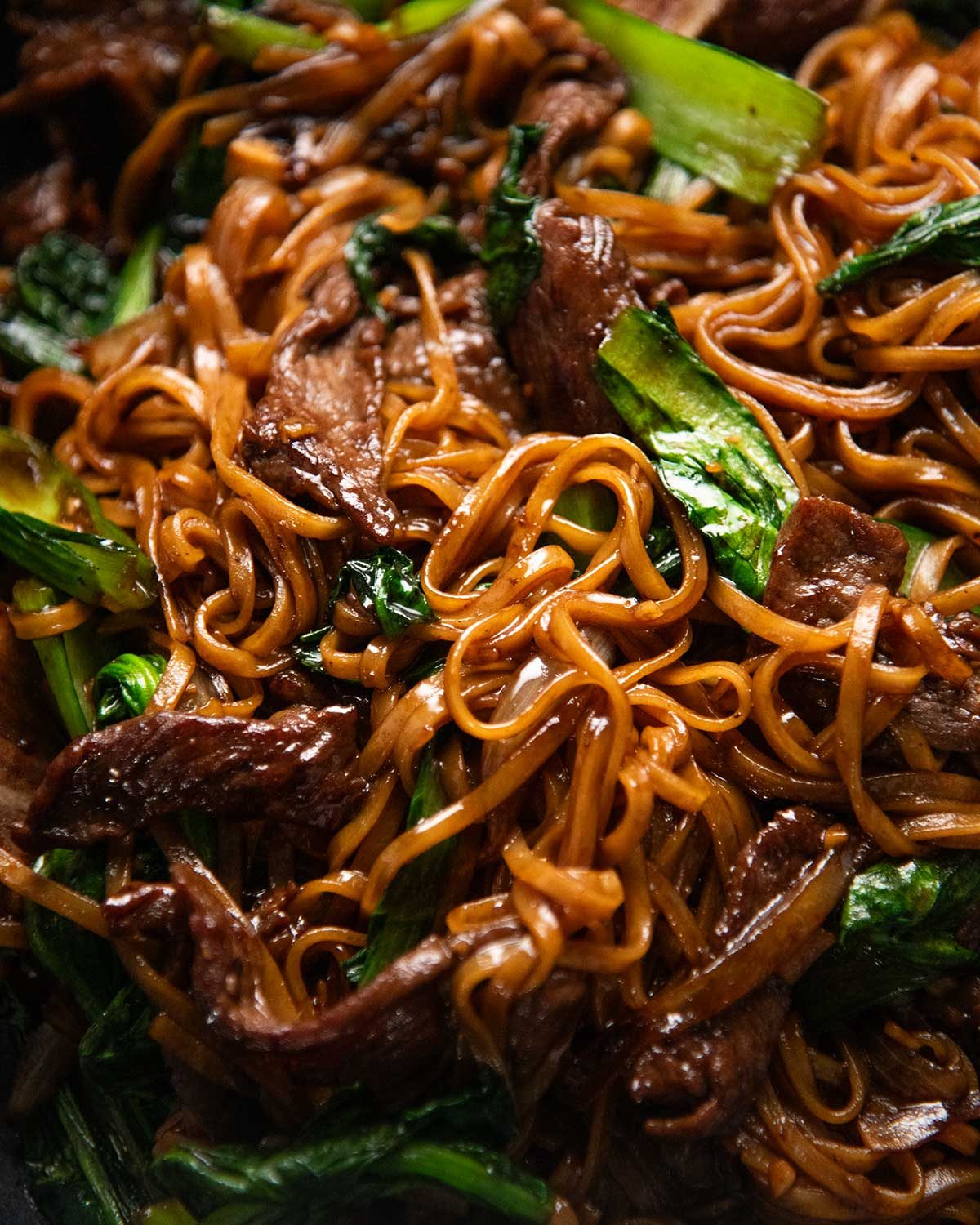
It’s a complete meal!
Today’s stir fried rice noodles has a good amount of leafy greens and protein to make this a complete meal, so you won’t need anything on the side. It’s also a generous portion so it should satisfy even those with a hearty appetite!
Hope you get a chance to try it. Love to know what you think if you do! – Nagi x
Beef Rice Noodles FAQ
It’s a cross between a Chinese and Thai stir fry noodle sauce. A little Thai because it’s oyster sauce forward, similar to Spicy Thai Drunken Noodles (Pad Kee Mao), except these noodles are not spicy.
Use 250g/8oz boneless chickens thighs – a little more because the sauce is one I made with beef in mind which has a stronger flavour. If using breast, also use 250g/8oz and tenderise it using the same directions and baking soda amount as the beef in this recipe.
You can also use pork – tenderloin or any steak cut.
Yes, if you use tamari instead of soy sauce, and get a gluten-free Oyster Sauce (Lee Kum Lee has one), both of which are carried at regular grocery stores these days (not all though, usually the larger ones), and Asian stores.
Leftovers will keep for 3 days. Reheat in the microwave. Not suitable for freezing – the noodles will break.
Watch how to make it
Hungry for more? Subscribe to my newsletter and follow along on Facebook, Pinterest and Instagram for all of the latest updates.
Beef Rice Noodles
Ingredients
Tenderised steak:
- 200 g / 7oz rump steak / top sirloin , cut into 3 – 4mm / 1/8" slices, or other steak – see Note 1
- 1/2 tsp baking soda (bi-carbonate) – NOT baking powder, won’t work
- 2 tsp light soy sauce (Note 2)
Stir fry:
- 2 tbsp peanut oil , canola or other neutral flavoured oil
- 200g / 7 oz Pad Thai-thickness flat rice noodles ~3-4mm (1/8" wide), or any other – see Note 3 for quantities
- 3 garlic cloves , finely minced with a knife
- 1/2 onion , sliced
- 6 – 8 baby bok choy, choi sum stems, Chinese broccoli (Gai lan) or other leafy Asian greens, cut into ~ 5cm / 2", stems separated from leafy part, thick/wide stems cut lengthways so they are all roughly the same size (Note 4)
Sauce:
- 1 tbsp light soy sauce , or all-purpose soy or tamari for gluten-free (Note 2)
- 1 1/2 tbsp dark soy sauce (Note 2)
- 3 tbsp oyster sauce (can substitute with vegetarian oyster sauce)
- 2 tsp white sugar (or honey, maple)
- 1 tbsp water
- Pinch white pepper (or black pepper, or chilli flakes)
Instructions
ABBREVIATED RECIPE
- Tenderise beef – toss with baking soda, leave 20 min, rinse, season with soy sauce. Stir fry – Sauté onion first, then beef, then garlic, then stems. Add leafy greens, prepared noodles, and sauce. Toss well then serve.
FULL RECIPE
Velvet the beef:
- Tenderise – Sprinkle the beef with baking soda in a small bowl. Toss with your fingertips to coat, separating the beef slices. Leave for 20 minutes to tenderise.
- Rinse, dry, season – Rinse in a colander, shake and pat off excess water with a paper towel (no need to be thorough). Place in a bowl and toss with the soy sauce. Set aside. (It doesn't need to marinating time).
Stir fry:
- Sauce – Mix ingredients in a small bowl.
- Soak and rinse noodles – Prepare the noodles according to packet directions (usually soaking in boiling water for 5 – 10 minutes). Drain, then rinse under tap water to remove excess starch so it doesn't go gluey when cooked.
- Cook onion, beef then garlic – Heat the oil over high heat in a large wok or large deep fry pan / skillet (~30cm/12"). Add the onion for 30 seconds. Add beef and cook until the red is almost gone (~1 minute), then add the garlic and cook for 30 seconds.
- Stems then everything else – Add the stem part of the Asian greens, toss for 1 minute. Add the leafy part, noodles then sauce (in that order). Toss for 1 1/2 to 2 minutes until the sauce has stained all the noodles and there is no sauce left in the base of the pan. Serve immediately!
Recipe Notes:
- Other options: Top side (US: top round) – I get a roast and portion, flank.
- Slow cooking cuts – like chuck, oyster blade, gravy beef – use a slightly heaped 1/2 teaspoon and leave for 35 min, rinse. proceed with recipe. Blade and bolar need 40 min, the only cut I don’t use is brisket (just doesn’t seem to tenderise).
- Chicken or pork option – Use 250g/8oz boneless chickens thighs or any pork chop (a little more because the sauce is one I made with beef in mind which has a stronger flavour). If using breast, also use 250g/8oz and tenderise it using the same directions and baking soda amount as the beef in this recipe.
- Extra wide ~1cm/0.4″ (Pad See Ew thickness) – 250g/8oz
- Vermicelli rice noodles ~1mm – 175g / 6oz
Nutrition Information:
Life of Jaffle
As I watched him try again and again and again to get in, that was the moment I realised: my sweet little boys’ greatest asset may not be between his ears. I think he’s going to be relying on his looks to get through life. 😂


Love, love, love stirfries – no two of mine are the same and I could eat them three times a week . . . love the eeny-meeny of choosing what to put with what! Very much agree with your recipe altho’ I have not oft used rice sticks! And Asian greens are a foregone conclusion with bok choi probably being my favourite, Was taught the bicarb method by some TV chef some 3-4 decades ago > it surely does work. Jaffle . . . well, he’s a wee bit too young for maths = width and length and the like . . . he’ll work it out methinks . . .
I agree Eha! Pretty sure I could have a stir fry every night of the week and not get bored!!
Oh bless him so beautiful and those big brown eyes ❤️ I’ll be cooking this recipe this week and have no doubt it will be delicious!
Every day those big brown eyes make it impossible for me to be mad at him for the naughty things he does!!
I think that is so adorable, and you would have to love him on that situation alone. It is so very cute and funny at the same time. He is so sweet 🥰❤️🐾
Not so cute when he digs holes on rainy days then gallops inside like a maniac and jumps ALL over me….😆
Sooo funny 🤣 Jaffle you are too handsome. Though don’t you give up🥰 Practice makes the master !
😂 We shall see….but I am not holding out much hope!!!
Another recipe saved to try… Honestly, my saved recipe area is basically just the whole of Nagi’s website saved😂
Nagi I think there are a couple of small mistakes if you don’t mind me saying 🙏🏽 Recipe says add fish sauce to the tenderised beef but video says soy sauce and so does the longer instructions!
I’m sure fish sauce is also great though 😊
Yikes! Thank you for picking that up Kelly, fixed. It’s soy sauce not fish sauce! I changed it at the last minute and forgot to update the body of the post 🙂 – N x
Hi Nagi, in your explanation before you mention the recipe you say to wash the beef and dry it and then add fish sauce but in the actual recipe it says soy sauce.
Ugh! Soy not fish sauce. I changed it at the last minute! Forgot to update the post. 🙂 Thanks for picking it up Debbie! – N x
Thanks as always for all your great meal ideas, I can’t wait until the next book haha! Kelly, Wales (UK)
Awww Jaffle …as Bernard King on Pot of Gold once famously said – Just be content with looking gorgeous darling 🐾🐾 ……this could be the recipe I was waiting for as a meal on Wednesday night – our Tommy dog is turning 2 🎈 …some steak for him the rest for us
Aww Tommy!! Happy birthday!! I hope you get lots of steak!! – N xx
Think he needs a country cat to teach him what’s what. Ours used to bring back BIG rabbits thru a rather small cat flap!
Love the recipe too, my hubby learned velveting from you and it really works!!!!!!1
I am SUCH a girl about things like that, I’d be squealing and freaking out all over the house if Jaffle did that! 😂
He’s a smart boy – you just need a wider door! OK, now I’ll check the recipe…
Ba ha ha!! That’s what I ended up doing of course 😂
We watched a cat trying to bring a very dead magpie (not her catch) through the catflap. I don’t think they’re silly, just not their strong point!
My smart big fluffy boofhead terrier caught an escaped duck very early Saturday morning. He’s still looking for her in the grass – she’s safely back on her nest – no harm done!
Dead magpie!!! Ohhhhh… shudder!
Hi Nagi & Jaffle, Who gives a damm about sticks, just the look in those eyes will open any door for him.Such a handsome boy
😂 I did end up having to open the door wider so Jaffle AND the stick could come in 😂
Nagi
My Guide Dog in training, Luckie, (I wrote to you recently) does the same with the stick and the door and he’s supposed to be super smart. I don’t think there’s anything wrong with your boy.
It’s a wonder you get any work done at all constantly watching that beautiful boy. Don’t they grow fast !! Have fun.
So maybe there is hope for him yet!! 😂 HUGS to Luckie! – N x