
The great Aussie Pavlova! With a how-to video and easy tips that make all the difference, you’ll nail this classic Pavlova recipe every single time. With a delicate meringue crust and soft marshmallow insides, top with cream and fruit for a pav that will steal the show at any gathering!
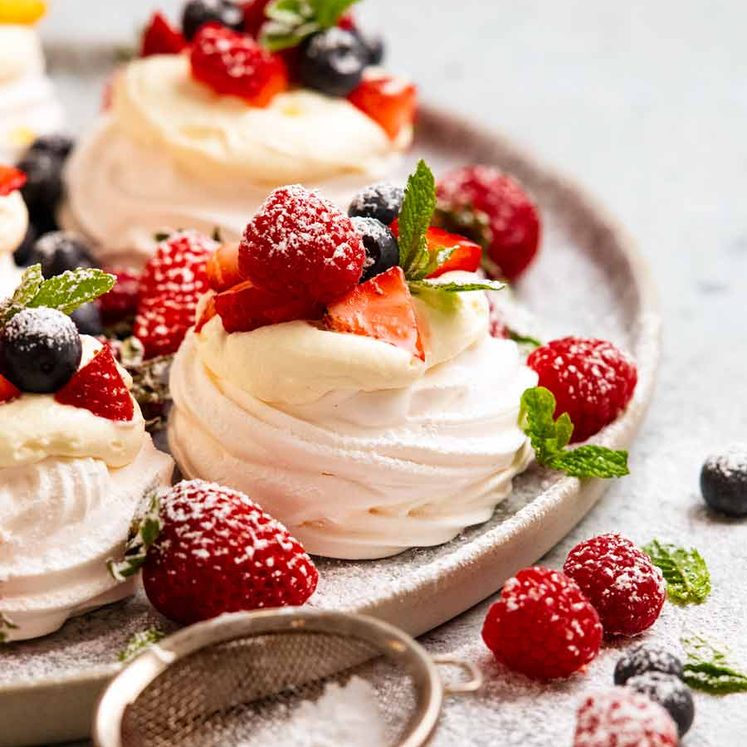
Next time, try Mini Pavs. They’re adorable!

Pavlova
There is no greater summer dessert than the great Aussie Pav!
Pavlova is one of those desserts that is notoriously easy yet notoriously difficult. I think many people are scared to make it. Others have lamented that you should just accept that it will come out of the oven quite cracked.
Though I’m going to be sharing my tips for a perfect near-flawless pav (including a few you may have never heard of before!), first up, let me be clear about one thing – it does not matter if it cracks!! Even if it cracks severely.
Just do your best to piece it back together, using cream as a glue and to hide the worst cracks. It only needs to hold together for you to place it on the table, for everyone to ooh and ah over it, for you to have your moment of glory.
The minute it gets cut to serve it up, it doesn’t matter. Even a perfect pav looks like a mess once it starts being served!
But as it so happens, if you follow my tips, I’m confident you’ll have a crack-less near-flawless Pav… 😉
With the recipe video and my secret tips, this Pavlova recipe is easy to follow and you’ll nail it every single time!

Tips for a perfect pavlova
I’ve seen many “no-fail pavlova” tip lists, but I’ve never seen a list with all of these, mainly because some of them are my own, discovered after many trial and errors!
1. Measure the egg whites by volume. This is a big tip! “4 egg whites” can range from anywhere between 100 – 180ml (3 – 6oz) depending on the size of the eggs + how much egg white you manage to get out of each egg. The amount of egg whites used is key to a successful Pav!
2. Use fresh store bought eggs. Not eggs that have been hiding in the back of your fridge for weeks!
Got your own chickens? I’m jealous! BUT, don’t use freshly laid eggs for pavlova as they take longer to fluff up. Use eggs that are circa 5 days+ old. Store bought eggs are a safe bet. 🙂
3. Separate the eggs while fridge cold. Trust me, it’s so much easier than when they’re at room temperature. PS If you’re new to separating yolks from whites, just crack the eggs into your hand and let the whites slide through between your fingers. Jiggle your hand slightly to get all the whites off the yolk, and you’ll be left with just the yolk sitting in your fingers.
4. Not even a drop of yolk is allowed! Even a bit of yolk can ruin the whole batch i.e. it won’t fluff up. So if you accidentally get yolk in your whites, you can try scooping it out using a shell (also good tip for picking out shell bits) but if you think there’s any chance it has tainted the rest of the whites, start again. It isn’t worth the risk!
5. Bring egg whites to room temperature. They fluff up much better. So separate while cold, then bring to room temperature.
6. Make sure your bowls and whisk are clean and dry. Grease and water can stop whites from fluffing.
7. Use an inverted cake pan. For shaping (saves you drawing a circle on paper) and also ease of transferring the Pav to a platter. There is nothing sadder than pulling a perfect Pav out of the oven, only to have it crack when transferring it to the serving platter!
Tips continued below photo….you didn’t think I was done, did you? 😉

8. WEATHER WARNING!!! Heat and humidity. As it happens, Pav is a summer dessert but it is not conducive to being made in hot humid weather. It can cause the Pav to collapse during or after baking. I don’t know the exact temperatures and humidity % cut off points and had a number of epic failures before I figure out tips #9 – #13. Using the tips below, the Pav in the photos were made last week during a heat wave when it was 33C/91F and humidity was 65 – 75%. So if it is hot and humid where you are, do not skip #8 onwards, they were created especially for the Aussie summer!!!
9. Bigger is better….except in summer 😎 I know, I know. You want to do a giant pav. But honestly, for the sake of a Pav that doesn’t collapse on you, stick with 4 eggs. I can’t stress that enough. I’m speaking from experience here, having tried a few 6 egg pavs a few weeks ago. A 4 egg Pav will serve 8 -10 easily. 4 eggs doesn’t sound like much, but this expands. Any larger, and the risk of severe cracking is really high. At least, in hot humid weather. You can do giant Pavs in cooler months!
10. Don’t make it too tall. The taller the Pav, the greater the risk of collapse / severe cracking. In summer, I wouldn’t go higher than 5cm/2″. It will expand to about 7cm / 2.7″. You can do your taller Pavs in cooler months. 🙂
11. Make the edges sloped / dome like shape. Yes, a perfect cake-like shaped Pav with vertical smooth edges is pretty. But it’s also the most fragile shape. The shape of my Pav, almost like a dome but with a flat top, is the safest. Having the rugged surface also helps provide stability I find. (Really hoping an engineer reading this can explain why this is so in simple English, this is beyond my capabilities. I just know they are much more stable shaped like this!)
12. Preheat oven to a high temp, then turn down. The initial high temp really helps to get that crust kick started to stabilise the meringue.
13. Bake on a very low temp for longer – This keeps your Pav nice and white (so pretteee!). I bake mine at 100C /210f (fan/convection) or 115C / 240F (standard). Also baking for longer at a lower temp again helps with stability (higher temp can cause Pav to puff too fast which then collapses later).
14. No peeking and no thundering through the kitchen!! Seriously, I am NOT joking. Peeking = loss of heat / door slamming = collapsed Pav. Thundering through kitchen with timber floors (I’m glaring at a certain giant fur ball as I write that) = collapsed Pav.
15. Leave in oven overnight. Or all day. Letting it cool down gradually = less cracking risk. Also in summer, especially on hot humid days, where better to leave the Pav than in a sealed almost-airtight oven?
16. BE GENTLE when topping the Pav! Hanging my head in shame. I once tipped a bowl of strawberries on a Pav and watched in dismay as it sank. Place the topping on gently by hand.
17. Make extra cream. No, not for serving. To use as glue / disguise cracks / in case it sinks. Remember the beauty of the Pav – even in a severely destroyed state, it can still be made to look pretty with cream and fruit!
Follow those tips for my Pavlova recipe, and this is what will come out of the oven even on a 33C/91F day – a near perfect Pav. 🙌🏼

Top with cream and berries, or whatever fruit you want! I totally forgot to put passionfruit on this. I do feel like passionfruit and Pav is just quintessentially Aussie!


And that moment when you place if on the table, when everyone oohs and aaahs over the beautiful Pav…lap it up. You totally deserve it. 😉
Marshmallow on the inside. The softest most delicate meringue on the outside. Smothered in softly whipped cream and piled high with fruit… I truly cannot think of a great Aussie summer dessert. – Nagi x
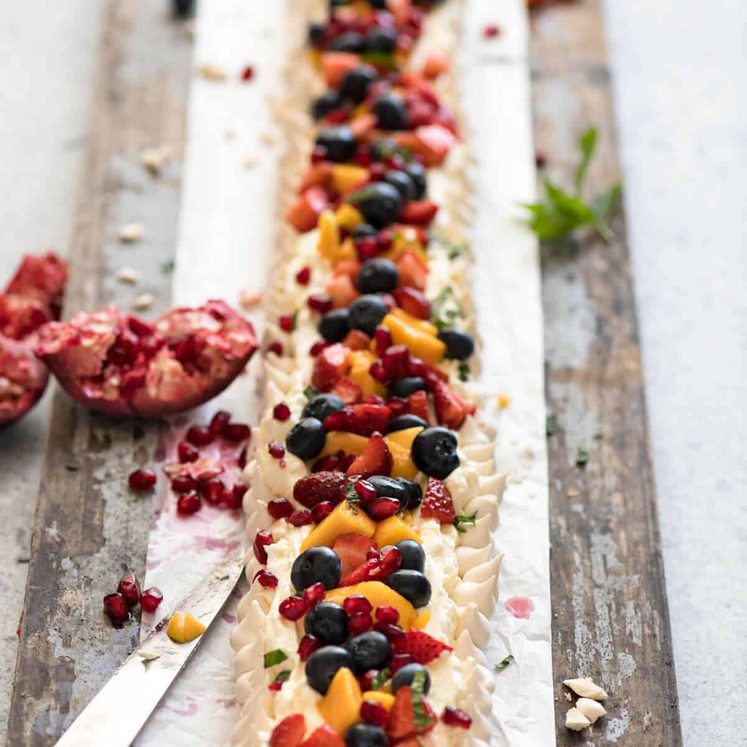
PS. If it’s Christmas time however, you can take Pavlova to a whole new level – literally – with my showstopper Pavlova Christmas Tree! Or, serve up a platter of adorable Mini Pavlovas!
I love pav.
See?

Watch how to make it
Pavlova recipe video! Excuse the lighting and colour balance, it’s all over the place because it was filmed over a couple of days. 😇
Hungry for more? Subscribe to my newsletter and follow along on Facebook, Pinterest and Instagram for all of the latest updates.

Pavlova!!
Ingredients
- 150 ml / 5 oz egg whites (4-5 eggs fridge cold eggs) (Note 1)
- 1 cup caster sugar (superfine sugar)
- 1 tbsp cornflour / cornstarch, sifted
- 1 tsp white vinegar
Cream
- 1 1/2 cups thickened cream / heavy cream (any whipping cream)
- 1/4 cup caster sugar (superfine sugar)
- 1 tsp vanilla extract or essence
Topping
- Fruit of choice. I used: raspberries, blueberries, strawberries and cherries.
Instructions
- Separate the whites and yolks while eggs are cold. Measure 150 ml/5oz egg whites (just shy of 2/3 cup, 140 – 160ml is ok).
- Set whites aside to come to room temperature.
- Preheat oven to 170°C/340°F (180°C fan-forced).
- Place whites in a bowl. Use a stand mixer (I use speed 7) or handheld beater (high) and beat until soft peaks form (Note 2)
- Add sugar 1 tbsp at a time, beating as you go. (Note 3)
- After adding the sugar, beat for a further 3 minutes or until thick and glossy. Rub a little of the fluff between your fingers, there should be no sugar grit – that means it is ready.
- Add cornflour and vinegar, beat on low for 5 – 7 seconds (or fold through with spatula) until just mixed through.
Making the Pav (Note 4)
- Get the base of a springform cake pan (24cm/9.5″ or larger) and turn it upside down. Dab meringue on the edge and place a piece of baking paper (parchment paper) on top.
- Gently place half the fluff onto the paper. Use the cake pan as a guide to make it round and coax it into a circle shape around 20cm / 8″ in diameter (Note 5).
- Carefully scoop out the remaining fluff. Now coax it into a dome shape (not a cake with straight smooth sides) with edges sloping in slightly. Flatten top. Make it 4-5cm / 2 ” high – not much higher. (Note 5). See video / photos in post. It will rise/expand.
- Transfer to baking tray. CAREFULLY place in the oven, GENTLY close the door and turn oven DOWN to 115°C/240°F (100°C fan).
- Bake for 1 1/2 hours – no peeking, no thundering through kitchen! (Note 6)
- Turn oven off, leave the door closed and leave Pav in the oven overnight to cool (I’ve done 18 hours).
- Transfer Pav to serving platter then slide cake pan out from underneath. Use butter knife if required to loosen edges from paper, then slide paper out from underneath.
- Just before serving, top with cream and fruit of choice.
- Serve and be a rock star!
Topping
- Place cream, sugar and vanilla in a bowl. Beat cream until it is thickened and just holds its shape – don’t overbeat, it should be silky smooth, not speckled with bubbles and stiff.
Recipe Notes:
Nutrition Information:
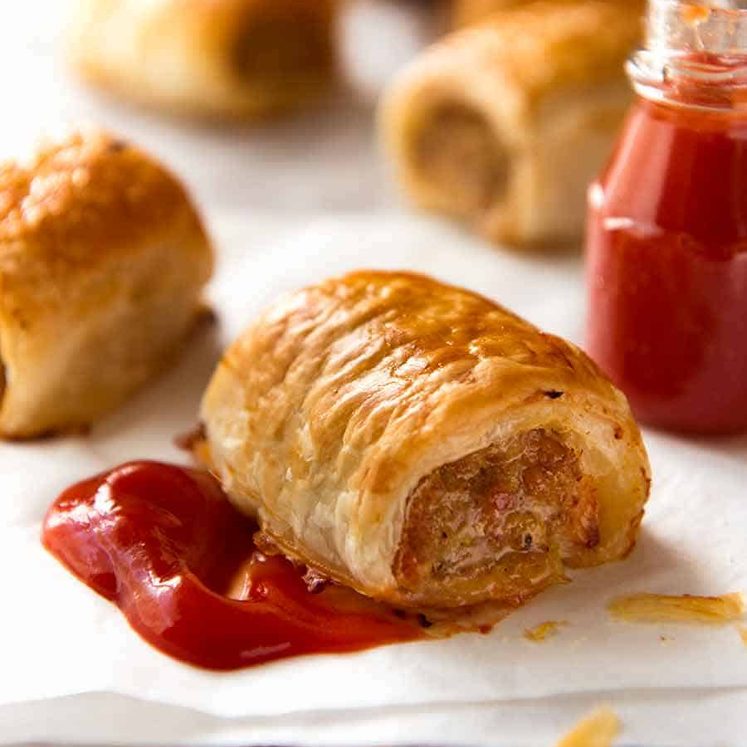
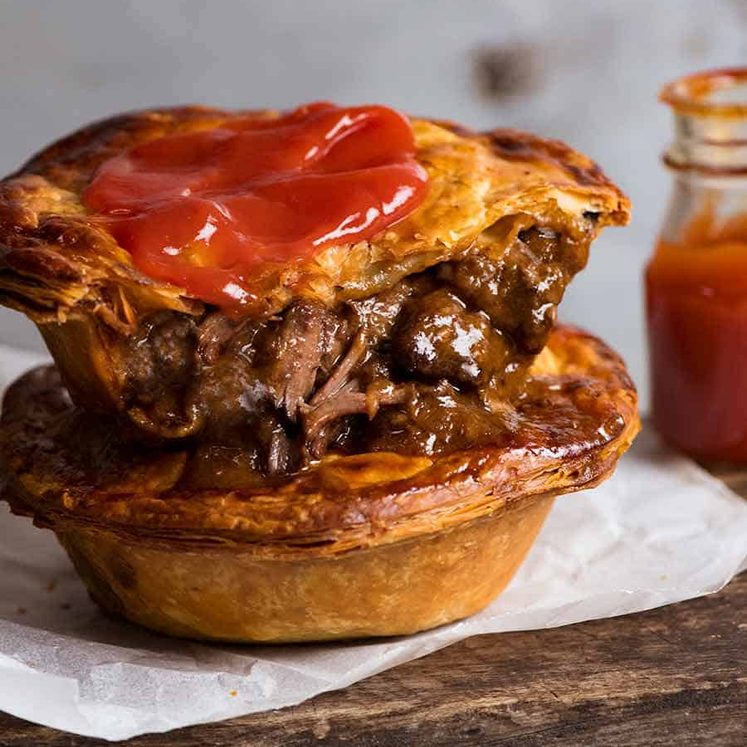
More Aussie favourites


LIFE OF DOZER
Waiting for the Pav to fall on the ground….

This is my first and last time to correct Nagi as she is generally on point and amazing! I’m from the leave the door ajar crew. I have been making Pavs for years (admittedly they are never perfect but still lovely) and I have always left the door ajar after cooking. This time I left the pavlova in there with the door closed. The pavlova was not as white as I would normally have it, so no door shut tight post cooking for me.
Great recipe! I followed this recipe to make my first-ever pav on Christmas. High-stakes day to try something new. Despite only leaving it in the oven for 4ish hours, it came out amazing with extremely minimal cracks. Was so good I had to make another a few days later.
Haven’t made a pav in a long time, made this Christmas morning and have to say the best pavlova ever. Stunning meringue crust, melt in your mouth filling, topped with fresh whipped cream, mango, banana, blueberries.
This was amazing, and now my new pav go-to recipe. But serves 10-12???? It barely did 4 of us (admittedly 2 teen boys, but still!). I’d describe as on the small
Side 🙂
Great recipe but there’s no reference to the vanilla essence in the instructions which resulted in me forgetting to put it in. But your recipes haven’t steered me wrong yet so I think I’ll be right!
This recipe and tips has improved my Pav 100%, thou there is one issue I keep getting the Pavis left in the oven overnight but doesn’t crip up seems to be tacky to the touch and it shrinks in size – any suggestions on how to stop that from happening?
Thank you Nagi!! I hosted my Mum for the first time this Christmas and made her your pavlova. It was perfect!!!
Great recipe. Have never had a fail and enjoyed supervising my 11 year old grandson make it. He was very proud and it was delicious.
Hi Nagi, just wondering if it is correct to have the fan forced temp higher than the normal oven temp as per your instructions?. Fan forced is usually lower so I’m just checking.
My first time making a pavlova and whilst I almost lost my arm from using a handheld mixer, it was worth it for the end result! It didn’t collapse or crack!! It had delightfully soft crunch to the shell with gooey inside, YUM. I topped it with fresh passionfruit pulp, mango, nectarine and cherries.
A foolproof recipe if you follow the instructions and read the tips in the blurb above the recipe itself.
Made it for Xmas, followed the recipe to a tee (except added a teaspoon of cream of tartar to the mixture) and the consensus was that it was the best Pav we’ve ever had. Your recipes never disappoint Nagi – thank you so much!
Second time made.. having for Christmas. It has worked perfectly again.. very grateful as cooking for strangers.. thankyou so much!
Nagi, I combined some light brown sugar together with about 1/4 cup of Castor sugar as ran out, and it cooked to a delicious cream colour and tasted more caramel!
That’s a really good idea! I’ll do that next time.
My first time EVER making a pavlova and this recipe was perfect! I topped it with the cream, strawberries, blueberries and fresh passionfruit pulp. So many compliments and second helpings from my friends. Another Nagi win!! xo
Everyone told me how many times they were unsuccessful at making a pavlova! First time about 2 weeks ago went so well, have made another 2 since then and all perfect! Love this recipe!
Easy Pavlova to make. It turned out perfect. Not too sweet & delicious crisp crust. Left in oven overnight. Yum
Followed recipe word for word, right down to cooling overnight in the oven and it turned out perfectly!
Hi I am only a young baker (10) and this is my first time making it (pavlova) and it turned perfect. I love this recipe I will definitely be using it again. I will definitely be rating this a five star.
First pavlova ever, turned out perfect
I made this yesterday because I had left over egg whites from another recipe. It turned out so well. Such a cute little pavlova.
Already did this recipe thrice! Turned out amazing each time.
Hi I am only a young baker (10) and this is my first time making it (pavlova) and it turned perfect. I love this recipe I will definitely be using it again. I will definitely be rating this a five star.
I made this last week as a dry run for Fathers Day and it was outstanding!!! I’d love to attach a photo.